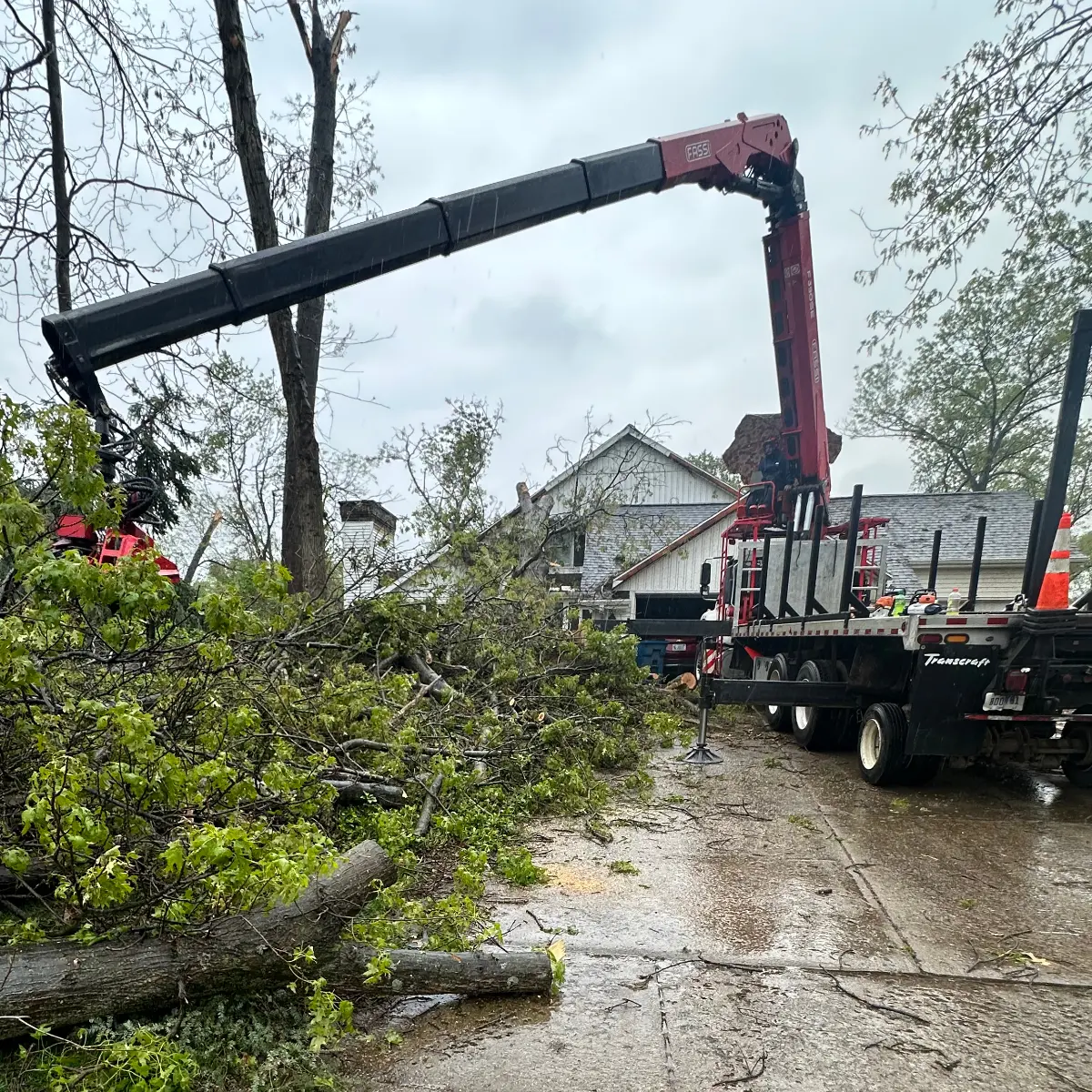
Emergency tree removal cost in Battle Creek comes down to a handful of things: the size of the tree, how dangerous and complex the job is, whether it’s an after-hours or storm response, the equipment it takes, and the cleanup involved. A small tree down in an open yard is a far cheaper job than a large one leaning on your roof or tangled in a power line. Here’s how each factor moves the price, so you know what you’re paying for when you call.
How much does emergency tree removal cost in Battle Creek?
Most emergency tree removals in the Battle Creek area run from a few hundred dollars for a small, simple job to several thousand for a large or hazardous one. The spread is wide because “emergency tree removal” covers everything from a single fallen limb to a mature oak on a house. The only way to get a real number is an on-site look, since the risk and access drive so much of the cost.
As a rule, the price climbs with the size of the tree and the danger of the job. A tree that’s already down and resting safely on the ground is at the low end. A tree that’s partly fallen, under tension, or threatening a structure sits at the high end because of the care it takes to bring it down.
Why does emergency removal cost more than a scheduled removal?
Emergency removal costs more because of the speed, the timing, and the added risk. When you call about a tree in your house at night or during a storm, you’re paying for an after-hours response and a crew that drops what it’s doing to get to you. That urgency is part of the price.
The bigger factor is danger. A planned removal happens on a healthy, stable tree in good conditions. An emergency job often means storm-damaged wood under tension, poor footing, and a tree in a bad position, all of which take more skill, more gear, and more time to handle safely. Our 24/7 emergency tree service is built for exactly these situations.
What are the main factors that affect the price?
Several things decide where an emergency removal lands on the price range, and the biggest are size, hazard, access, condition, equipment, and cleanup. Tree size does the most work, since taller trees and thick trunks take more time, more rigging, and more hauling to clear. Hazard comes next, because a tree close to your house, power lines, or another structure has to be taken down in careful pieces rather than felled, and that caution adds hours to the job.
The condition of the tree matters just as much in an emergency. Storm-damaged, leaning, split, or partly fallen trees hold tension that has to be released in the right order, which takes more skill and raises the cost. Access and equipment work together here too: a tree in a tight yard or a spot a truck can’t reach may need a climber or a crane, and any job that calls for a crane or grapple truck costs more than one a crew can handle with hand tools. Finally, cleanup rounds out the bill, since hauling debris, chipping the brush, and grinding the stump all add to the total.
How does tree size change the cost?
Tree size is the single biggest driver of removal cost. A tall tree with a thick trunk holds far more weight and takes more cuts, more rigging, and more hauling than a small one. Height and trunk diameter together give a good sense of the work involved before anyone sets foot on the property.
A small tree under about 30 feet is usually a quick, lower-cost job. A large mature tree over 60 feet, especially an oak or maple with a heavy canopy, is a major job even in good conditions, and more so in an emergency. For a sense of how general pricing works across tree sizes, our guide on tree and stump removal cost in Battle Creek breaks it down further.
How do hazards and equipment raise the cost?
Hazards and the equipment needed to work around them are what push an emergency job toward the top of the range. A tree near power lines, on a roof, or over a tight space can’t just be felled. It has to come down in controlled pieces, and that takes rigging, a climber or bucket, and sometimes a crane or grapple truck to lift heavy sections clear of the house.
That controlled process is where the cost and the safety meet. We walk through exactly how it works, and why it takes the gear it does, in our case study on what happens during an emergency tree removal job. The harder it is to protect what’s underneath the tree, the more the job costs.
What’s included in the price, and what adds to it?
A standard emergency removal covers taking the tree down and clearing the main debris, but a few things commonly add to the bill. Knowing them up front helps you compare quotes fairly.
- Debris removal and chipping: hauling and processing the wood is often included, but confirm it
- Stump grinding: removing the stump is usually a separate add-on, which our stump grinding service handles
- Large log disposal: big trunk sections may cost extra to haul off, or you can keep them for firewood
- Lawn or property repair: heavy equipment on soft ground after a storm can mean minor cleanup
Does insurance cover emergency tree removal?
Homeowners insurance often covers emergency tree removal when the tree has hit a covered structure like your house, garage, or fence. If a tree simply falls in the yard without damaging anything, coverage is less likely, and limits vary by policy. Keep your photos and the invoice for any claim.
Because a storm emergency and an insurance claim so often go together, it’s worth knowing where you stand before you call. Our guide on whether home insurance covers fallen tree damage in Battle Creek explains what Michigan homeowners can usually expect.
How can you get an accurate price?
The only way to get a real price is an on-site assessment, since the cost depends on details you can’t judge from a phone call. We look at the tree’s size, condition, position, and access, and what’s at risk underneath it, then give you a clear quote and explain what’s driving it.
In a true emergency, safety comes first and the exact number follows. If a tree is on your home or near a power line, call right away and stay clear of it, and if it’s damaged but still standing, our guide on what to do if a storm damages your tree helps you decide how urgent it really is.
Frequently asked questions
How much does emergency tree removal cost in Battle Creek?
Most jobs run from a few hundred dollars for a small, simple removal to several thousand for a large or hazardous one. The final price depends on the tree’s size, condition, access, and how much risk is involved, so an on-site quote is the only accurate number.
Is emergency tree removal more expensive at night or on weekends?
Usually yes. Part of what you’re paying for is an after-hours, rapid response, so a job that can’t wait until regular hours typically costs more than the same removal scheduled in advance.
Does a fallen tree on my house cost more to remove?
Yes. A tree on a structure has to be removed in careful, controlled sections, often with a crane, to avoid adding damage. That extra care and equipment make it one of the higher-cost emergency jobs.
Will my insurance pay for it?
Often, if the tree damaged a covered structure. Coverage and limits vary by policy, so document everything with photos and keep the invoice for your claim.
Can I lower the cost of an emergency removal?
Sometimes. Keeping the large logs for firewood, skipping stump grinding for now, or handling minor cleanup yourself can trim the total. Safety can’t be cut, but we’ll always tell you which parts of a job are optional.
Do you offer free estimates for emergency tree removal?
Yes. We provide a clear, no-obligation estimate on site before any work starts, so you know the cost and what’s driving it before you commit.