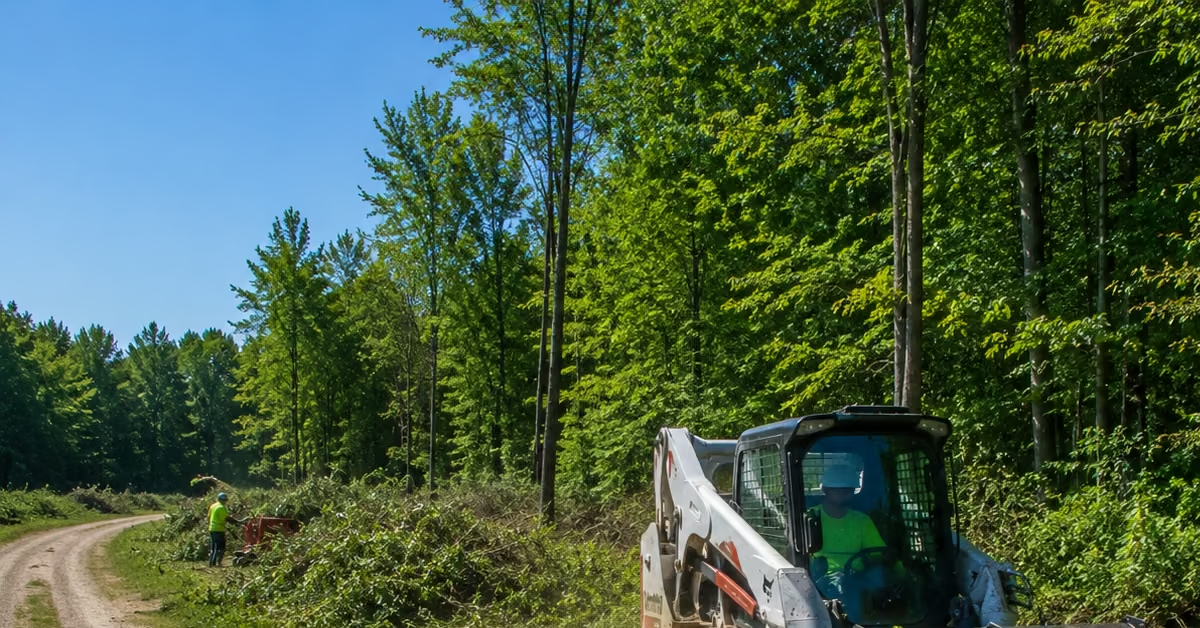
Brush clearing along a rural access road on Michigan acreage

Key Takeaways

  • Brush clearing can make rural acreage easier and safer to access for vehicles, equipment, emergency responders, and property owners.
  • Overgrown vegetation often hides drainage problems, damaged trees, fence lines, stumps, erosion, and invasive plants.
  • A thoughtful clearing plan should preserve desirable trees, wildlife habitat, soil stability, and property boundaries whenever possible.
  • Clearing corridors before wet seasons or winter can reduce delays when roads become muddy, snowy, or difficult to navigate.
  • Professional equipment and trained operators are important when brush is close to utilities, structures, septic systems, wetlands, or steep slopes.

Rural Michigan acreage offers privacy, natural beauty, and room to work, hunt, farm, or simply enjoy the outdoors. But land that is not maintained can become difficult to use surprisingly quickly. Thorny shrubs spread into driveways, saplings crowd access lanes, fallen limbs block trails, and tall weeds hide obstacles that were not visible a year earlier.

For property owners in Southwest Michigan and surrounding communities, brush clearing is often the first practical step toward making acreage more useful. Whether you are opening an overgrown farm lane, reclaiming the edge of a field, preparing land for a pole barn, or improving access to a wooded section, clearing vegetation can make a rural property safer and easier to manage. The goal should not always be to remove everything. Good brush clearing creates usable space while protecting healthy trees, stable slopes, stream buffers, and the character of the property.

Why Rural Access Becomes Difficult

A rural driveway or access road may begin as a clear path, but vegetation gradually narrows it from both sides. Branches extend into the travel lane, brush bends under snow, and young trees establish themselves in areas that were previously mowed or grazed.

This creates several problems:

  • Trucks and trailers may scrape against branches.
  • Emergency vehicles may have difficulty reaching a home or outbuilding.
  • Farm equipment may not have enough turning or passing room.
  • Sightlines become poor at curves, gates, and intersections.
  • Fallen branches can block access after storms.
  • Wet vegetation keeps roads shaded and slows drying.
  • Hidden stumps and debris increase the chance of equipment damage.

In Michigan, seasonal conditions make these challenges more serious. Spring thaw can turn a narrow lane into a muddy track. Summer growth can close in around trails and fence lines. Heavy snow can bend weak saplings over driveways, while ice storms may bring down limbs from trees already crowded by brush. Clearing vegetation before it becomes a complete obstruction gives property owners more options and reduces the chance of an urgent access problem later.

What Brush Clearing Can Improve

Driveways and Private Roads

A cleared access corridor gives vehicles enough horizontal and vertical clearance to travel safely. The exact dimensions depend on the road, vehicle type, terrain, and local requirements, but the objective is simple: branches should not interfere with drivers, mirrors, trailers, or tall equipment. The work may include – removing shrubs, saplings, low limbs, fallen trees, and selected trees that are growing directly into the travel path. 

Farm and Equipment Access

Rural landowners often need more than a passenger vehicle to reach their property. Tractors, brush mowers, utility vehicles, trailers, and delivery trucks require wider turning areas and stronger access routes.

Brush clearing can open:

  • Field entrances.
  • Barn and pole-building approaches.
  • Hay and timber access lanes.
  • Equipment storage areas.
  • Gate approaches.
  • Areas around ponds, wells, and utility structures.

Opening these spaces can reduce repeated damage to equipment and make routine property work more efficient.

Fences and Property Boundaries

Overgrown brush frequently hides fencing. When that happens, posts can rot unnoticed, wires can become tangled in vines, and fallen trees can pull sections of fence out of alignment. Clearing a controlled strip along a fence line makes inspection and repair easier. It can also help landowners identify whether vegetation is growing inside their property, crossing a boundary, or threatening neighboring structures. Property owners should confirm boundaries before major clearing. A visible tree line is not always a legal property line, and removing vegetation across a boundary can create avoidable disputes.

Drainage and Water Movement

Brush clearing does not automatically solve drainage problems, but it can reveal them. Dense vegetation may hide blocked culverts, eroded banks, standing water, or low areas where runoff collects. Once the site is visible, a landowner can better determine whether water is being redirected toward a driveway, building, septic area, or neighboring property. Clearing should be planned carefully around ditches, streams, wetlands, and shorelines because removing too much vegetation can increase erosion. A tree professional firm in Battle Creek, MI can identify vegetation concerns, but drainage engineering or wetland-related work may require additional specialists or approvals.

Clearing Without Overclearing

The most attractive and useful rural properties are rarely the ones where every tree and shrub has been removed. They are usually properties where vegetation has been managed intentionally.

Before work begins, decide what should remain:

  • Mature shade trees with good structure.
  • Native trees that provide wildlife value.
  • Stable vegetation on slopes and stream banks.
  • Windbreaks protecting buildings or fields.
  • Healthy trees that contribute to privacy.
  • Young desirable trees that can develop with proper spacing.

Brush clearing should focus on vegetation that blocks access, creates a hazard, damages infrastructure, or prevents a planned use. Removing all vegetation can expose soil, increase wind, encourage invasive plants, and change drainage patterns.

A phased approach is often better than a single large clearing project. First open the driveway or equipment lane. Then clear around buildings and utilities. Finally, assess secondary areas such as trails, field edges, and wood entrances.

Preparing Before the Crew Arrives

A little preparation can make the project safer and more efficient. 

  • Walk the property and mark the areas that need access
  • Identify gates, septic components, wells, buried utilities, culverts, irrigation lines, survey markers, and areas where equipment must not travel.
  • Consider how the cleared material should be handled. Options may include:

a.) Chipping branches into mulch.

b.) Cutting larger logs into firewood.

c.) Hauling material away.

d.) Creating brush piles in approved locations.

e.) Leaving selected logs for habitat.

f.) Grinding accessible stumps.

  • Ask whether the work will require access through a neighbor’s property or across a shared driveway. Confirm permission before scheduling equipment.
  • It is also helpful to identify the end use. A future building site may require stump removal and grading, while a walking trail may benefit from leaving some canopy and natural cover.

Why Professional Equipment Matters

Brush clearing can look like a simple cutting job, but rural properties often contain hidden hazards. A fallen tree may be under tension. A vine-covered sapling may be attached to a larger limb. A tree near a driveway may lean toward the only route heavy equipment can use. Professional crews can match the equipment to the terrain and material. Depending on the site, this may include chippers, brush cutters, loaders, stump grinders, winches, and specialized saws.

The most important benefit is not speed alone. It is controlled removal. A trained crew can determine which trees should be cut, how to lower material safely, and where equipment can travel without damaging soil, septic systems, or remaining trees. Do not attempt to operate a chainsaw beneath hung-up trees, near energized lines, or on unstable ground without the required training and protective equipment.

A Practical Clearing Plan

A useful acreage-clearing plan generally follows this sequence:

  1. Define the access goal. Decide whether the project is for vehicles, farm equipment, emergency access, construction, recreation, or several uses.
  2. Inspect the corridor. Look for hazardous trees, utility lines, drainage features, fences, stumps, and unstable ground.
  3. Mark what stays. Identify healthy mature trees, buffers, and landscape features worth preserving.
  4. Clear priority areas first. Begin with the main driveway, gates, structures, and emergency routes.
  5. Process the material. Chip, haul, stack, or retain wood according to the property’s needs.
  6. Review the result. Confirm that vehicles can pass, sightlines are adequate, and no new erosion or drainage issue has been created.
  7. Schedule maintenance. Young trees and shrubs will return, so plan periodic trimming or mowing.

This approach prevents a common mistake: clearing a large area without creating a maintenance plan. Brush grows back fastest where soil has been disturbed and sunlight reaches the ground.

Brawner’s Tree Service provides professional brush hogging for overgrown fields, lots, pastures, and rural acreage throughout Calhoun County and surrounding Michigan communities. Our powerful equipment can cut through thick grass, dense brush, weeds, and small trees to improve access, visibility, and land usability. Whether you are maintaining an existing property, opening an access route, or preparing land for a future project, our experienced team can help keep vegetation under control.

Frequently Asked Questions About Brush Clearing in Michigan 

Can brush clearing improve emergency access?

Yes. Removing branches, saplings, and fallen trees from a private drive can improve access for fire, medical, and utility vehicles. Local access requirements may vary, so property owners should verify any specific standards with their municipality or emergency authority.

Should I clear all the way to the ground?

Not necessarily. Some areas need stump grinding or complete removal, especially where vehicles, buildings, or construction are involved. Along trails or property edges, cutting brush low and leaving selected roots and groundcover may better protect the soil.

Is winter a good time for brush clearing?

Winter can provide firmer ground and fewer leaves, making some sites easier to inspect. However, frozen soil, snow, and ice can also create hazards. The best timing depends on terrain, access, wildlife considerations, and the project’s purpose.

Can brush clearing damage healthy trees?

It can if equipment strikes trunks, roots are compacted, or vines are pulled carelessly from branches. Professional planning helps protect desirable trees during the clearing process.

What happens to the brush?

Brawner’s Tree Service can discuss chipping, hauling, firewood processing, or other practical options. The right choice depends on the material, available space, and how the property will be used.

Summary Checklist: Property Access and Brush Clearing 

Situation What to Check What to Do
Driveway is narrowed by brush Low limbs, shrubs, saplings, and fallen trees Clear a safe travel corridor with adequate side and overhead clearance
Farm equipment cannot pass Lane width, turning areas, and gate access Remove obstructions and widen priority areas
Fence line is hidden Damaged posts, vines, wire, and fallen trees Clear the fence line and inspect the boundary
Drainage is concealed Blocked culverts, standing water, and erosion Expose the issue and obtain drainage guidance if needed
Trees threaten access Dead limbs, decay, lean, or storm damage Have an arborist inspect trees near the route
Clearing exposes soil Slopes, ditches, and waterways Preserve stabilizing vegetation and address erosion risk
Brush has been removed Regrowth from roots and stumps Schedule follow-up mowing, trimming, or stump grinding
Cut material remains Logs, chips, and brush piles Choose chipping, hauling, firewood, habitat, or disposal

Final Advice

Rural acreage becomes easier to enjoy and maintain when access routes are planned before vegetation takes control. Brush clearing can open driveways, protect equipment, expose drainage issues, improve emergency access, and prepare land for future improvements without requiring the removal of every tree.

If overgrowth is narrowing your private road, hiding a fence, blocking a building site, or creating a storm-related hazard, Brawner’s Tree Service can help evaluate the property and develop a practical clearing plan. The best result is not simply an empty space; it is a safer, more functional property with the right vegetation preserved in the right places.

Reviewed by a Licensed Arborist

This article should be reviewed by a licensed arborist to ensure accuracy with the recommendations for the specific Michigan service area.

Sources & Credible References