Key Takeaways
- Calhoun County’s tree population reflects its mixed hardwood forest region, with maples, oaks, and ash among the most common species.
- Different species come with different maintenance needs, growth rates, and susceptibility to local pests and diseases.
- Knowing which trees are on your property helps you anticipate seasonal maintenance and potential health concerns.
- Some common species, like ash, face significant regional threats that homeowners should be aware of.
- Proper species identification is the first step toward effective, targeted tree care.
Calhoun County, Michigan sits within a region of mixed hardwood forest that has shaped the character of its neighborhoods, parks, and rural properties for generations. Homeowners throughout the county, from Battle Creek to the surrounding townships, live among a fairly consistent set of tree species, many of which were either planted decades ago as street trees or are native to the region’s woodlands and have persisted through generations of development.
Understanding which trees are common in Calhoun County, and what each species needs to stay healthy, helps homeowners make better decisions about maintenance, pruning schedules, and when to call in a professional.
Sugar Maple
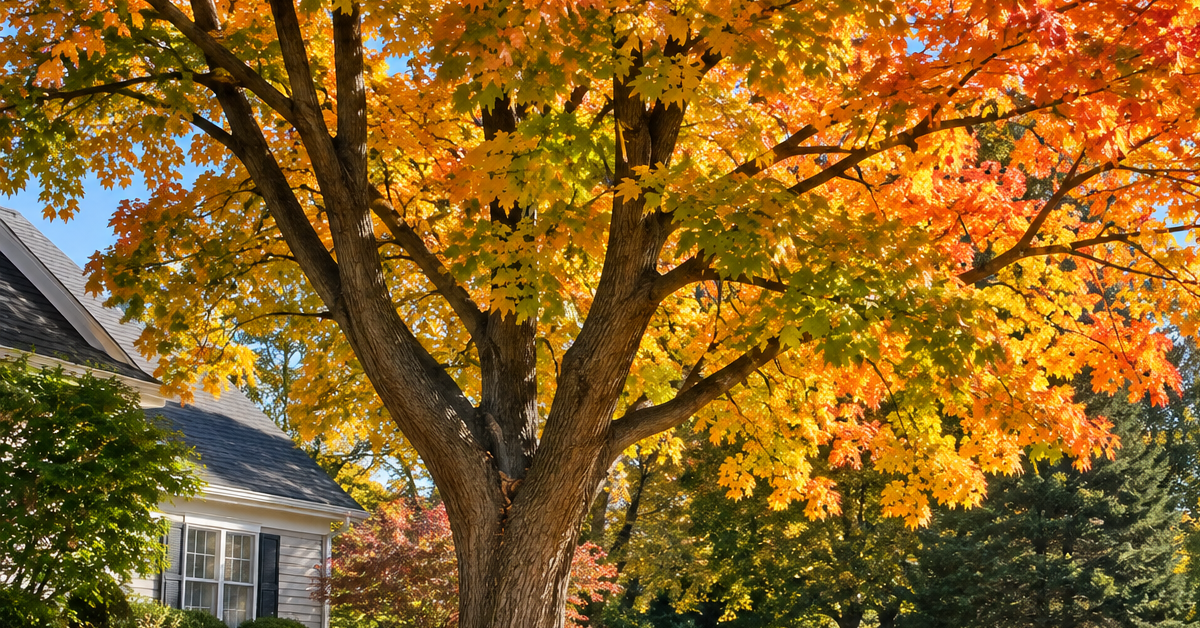
The sugar maple is one of the most iconic trees in Michigan, and Calhoun County is no exception to its widespread presence. Known for its brilliant orange and red fall foliage, the sugar maple is a slow-growing but long-lived species that can reach considerable size over many decades. Its dense canopy makes it a popular choice for shade, and its extensive root system, while beneficial for stormwater absorption, can sometimes compete with lawns or nearby plantings for moisture and nutrients.
Sugar maples are generally low-maintenance once established, though young trees benefit from structural trimming & pruning to establish a strong branch framework. Older sugar maples should be monitored for signs of decay, particularly around old pruning wounds or areas where large limbs have been removed in the past.

Red Maple
Closely related to the sugar maple, the red maple is another extremely common species throughout Calhoun County, valued for its adaptability to a range of soil conditions and its striking red fall color.
Red maples grow more quickly than sugar maples, which makes them a popular choice for newer developments looking to establish shade more rapidly, though this faster growth can sometimes come with slightly weaker wood compared to slower-growing species. Because of this, red maples benefit from regular structural pruning, particularly while young, to reduce the likelihood of weak branch unions developing as the tree matures.
Oak Species
Several oak species are common throughout Calhoun County, including red oak, white oak, and bur oak, each suited to slightly different soil and moisture conditions. Oaks are generally long-lived, slow-growing trees that can become significant landscape features over many decades, and mature oaks are often among the largest and oldest trees found on established properties throughout the county.
Oaks are susceptible to a condition known as Oak Wilt, a fungal disease that can spread between trees through root grafts or insect activity, particularly if pruning occurs during the wrong season. Homeowners with oak trees should be cautious about pruning during the active growing season, typically avoiding cuts from April through July when the disease is most easily spread, and should consult a professional if oak wilt is suspected.
Ash Trees and the Emerald Ash Borer (EAB) Concern
Ash trees were once extremely common throughout Michigan, including Calhoun County, but the arrival of the emerald ash borer, an invasive beetle, has devastated ash populations across the state over the past two decades. Homeowners with ash trees on their property should be aware that this pest remains a significant threat, and untreated ash trees are highly likely to decline and eventually die once infested.
Signs of emerald ash borer infestation include –
- thinning canopy
- D-shaped exit holes in the bark, and
- increased woodpecker activity as birds search for larvae beneath the bark.
Homeowners with valuable, healthy ash trees may have the option of preventive treatment, but this decision should be made in consultation with a professional familiar with the current state of ash health in the local area, since heavily infested trees are generally not good candidates for treatment and instead need to be removed before they become hazardous.
Black Walnut
Black walnut trees are a notable presence in Calhoun County, particularly on older, larger properties and in areas that were historically farmland. Known for both their valuable timber and their production of walnuts each fall, black walnut trees also produce a chemical compound called juglone, which can be toxic to certain other plants growing nearby, including tomatoes and some ornamental species.
Homeowners with black walnut trees should be mindful of what they plant in proximity to these trees to avoid unintentional plant stress or dieback in sensitive species. Black walnuts are generally hardy trees but can develop structural issues as they age, particularly in trees that were not pruned for structure while young.
Eastern White Pine
Among the conifers found in Calhoun County, the eastern white pine is one of the most common, valued for its soft, long needles and relatively fast growth rate. White pines are often used as windbreaks or privacy screening due to their dense, evergreen growth habit, and they can reach substantial heights over time.
White pines are susceptible to white pine weevil, which attacks the tree’s leading shoot and can cause a forked or misshapen growth habit if not addressed early. They can also be sensitive to soil compaction and root disturbance, which is worth keeping in mind during any construction or landscaping projects near established pines.
Eastern Cottonwood
Eastern cottonwood is a fast-growing native species often found along riverbanks and in low-lying, moist areas throughout Calhoun County, including areas near the Kalamazoo River. While cottonwoods can grow quickly and provide substantial shade in a relatively short time, they are also known for weaker wood compared to slower-growing hardwoods, making them more prone to limb breakage during storms.
Homeowners with mature cottonwoods should schedule regular inspections, particularly after significant wind events, to check for deadwood or weak limb unions that could pose a hazard.
American Elm and Disease-Resistant Cultivars
American elm was once one of the most widely planted street trees throughout the Midwest before Dutch elm disease dramatically reduced its population starting in the mid-20th century. While mature American elms are less common today than they once were, disease-resistant cultivars have been developed and are increasingly planted throughout Calhoun County as replacement street trees, offering the classic vase-shaped canopy elms are known for with improved resistance to the disease that devastated earlier plantings.
Why Species Identification Matters for Homeowners
Knowing which species are present on your property is more than an interesting fact; it directly informs how you should approach maintenance. Different species have different pruning timing requirements, different susceptibility to regional pests and diseases, and different growth rates that affect how often they need structural attention.
A homeowner who knows they have an oak, for example, will understand the importance of avoiding pruning during peak oak wilt transmission season, while a homeowner with an ash tree will know to watch for emerald ash borer symptoms and consider their options proactively rather than waiting until decline is advanced.
How Brawner’s Tree Service Provides the Right Care for Every Tree
Brawner’s Tree Service helps Calhoun County homeowners understand what their trees need by identifying species and assessing their condition, location, and growth patterns. We recognize that every tree has different pruning, health, and maintenance requirements, so we avoid taking a one-size-fits-all approach.
Brawner’s Tree Service helps homeowners identify common species such as maples, oaks, ash, black walnut, white pine, and cottonwood. Our team can spot potential concerns, including pest activity, disease symptoms, structural weaknesses, and storm-related damage. We also provide guidance on appropriate pruning schedules and ongoing maintenance based on each tree’s specific needs.
For trees at risk from issues such as emerald ash borer or oak wilt, Brawner’s Tree Service helps homeowners understand their options and take timely action. With professional tree care and regular monitoring, we help protect the health, safety, and long-term value of trees across Calhoun County. Our goal is to help homeowners keep their trees healthy and thriving for years to come.
Frequently Asked Questions About Calhoun County’s Most Common Trees
What are the most common shade trees in Calhoun County?
Sugar maple, red maple, and various oak species are among the most common shade trees found throughout Calhoun County’s residential neighborhoods.
Are ash trees still a good choice to plant in Calhoun County?
Due to the ongoing threat from emerald ash borer, ash trees are generally not recommended for new plantings unless paired with a long-term treatment plan.
Why do oak trees need special pruning timing?
Pruning oaks during the active growing season increases the risk of spreading oak wilt, a serious fungal disease, so cuts are typically best made in late fall or winter.
Is it safe to plant a garden near a black walnut tree?
Certain plants, including tomatoes, are sensitive to a compound called juglone produced by black walnut roots, so garden placement should account for this.
How can I tell if my ash tree has an emerald ash borer?
Signs include thinning canopy, D-shaped exit holes in the bark, and increased woodpecker activity, though a professional assessment provides the most reliable diagnosis.
Do cottonwood trees require more maintenance than other species?
Cottonwoods grow quickly but have comparatively weaker wood, so they benefit from more frequent inspection for deadwood and storm damage.
What is being planted to replace American elm trees?
Disease-resistant elm cultivars are increasingly used to replace the classic elm street tree while offering improved resistance to Dutch elm disease.
How do I find out what species of tree I have on my property?
A professional tree service or certified arborist can identify tree species and provide guidance specific to that species’ care needs.
Summary Checklist: Common Calhoun County Trees and Care Needs
| Species | Key Consideration |
| Sugar maple | Slow-growing, monitor older trees for decay |
| Red maple | Faster growth, needs early structural pruning |
| Oak species | Avoid pruning during oak wilt season, April to July |
| Ash trees | Watch for emerald ash borer, consider treatment or removal |
| Black walnut | Be mindful of juglone effects on nearby plants |
| Eastern white pine | Watch for weevil damage and soil compaction |
| Eastern cottonwood | Inspect regularly for weak limbs after storms |
| American elm | Newer plantings favor disease-resistant cultivars |
Final Advice
Calhoun County’s tree population reflects the broader mixed hardwood forest region of southern Michigan, and understanding which species are present on your property is genuinely useful information for any homeowner. Maples and oaks make up much of the shade canopy in established neighborhoods, while ash trees remain a significant concern due to the ongoing threat from emerald ash borer.
Taking the time to identify the trees on your property, or having a professional tree service firm in Calhoun County, Michigan do so, allows you to plan maintenance around each species’ particular needs rather than applying a one-size-fits-all approach. This is especially important for pruning timing with oaks and proactive monitoring for pests like the emerald ash borer, where early awareness can make a meaningful difference in outcomes.
Brawner’s Tree Service works with homeowners throughout Calhoun County to identify tree species and build maintenance plans that keep the area’s diverse canopy healthy for years to come.