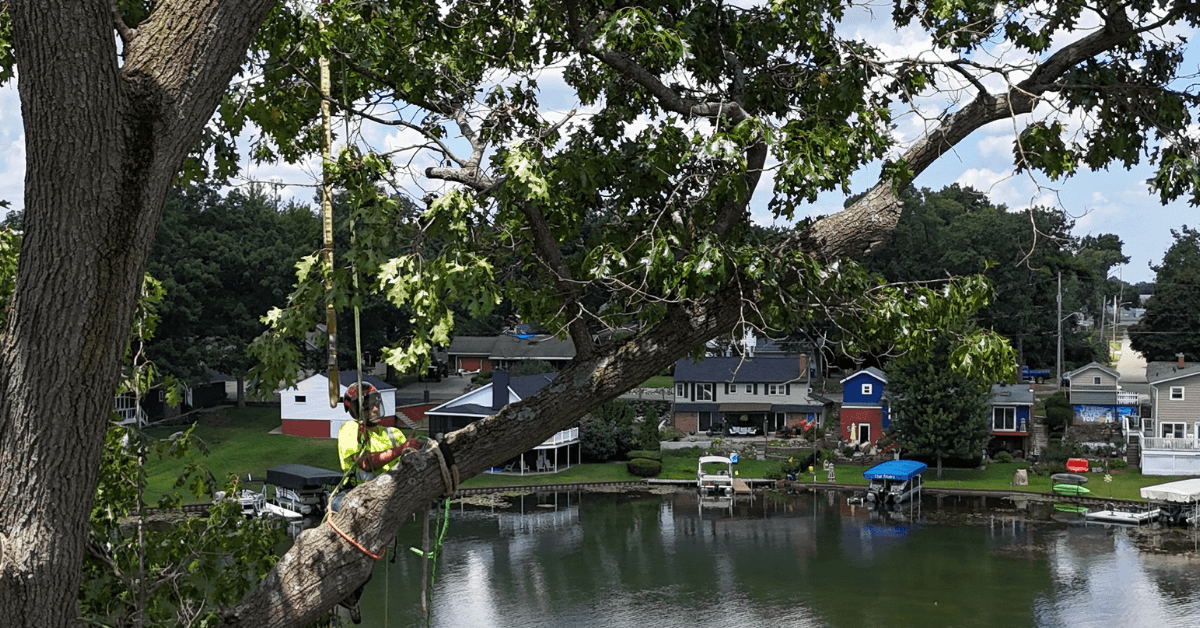
What Is Tree Trimming and Why Is It Important?
Tree trimming (also called pruning) is the selective removal of branches to improve a tree’s structure, health, or aesthetics. Here’s why it matters:
- Encourages healthy growth
- Prevents overgrowth and deadwood
- Reduces risk from weak or hanging limbs
- Improves air circulation and sunlight exposure
- Enhances curb appeal and landscape design
In Kalamazoo, where heavy snow and spring winds are common, proper trimming also protects homes, power lines, and people.
Regular trimming also helps your trees live longer. When dead or diseased branches are removed early, it prevents the spread of decay and allows the tree to allocate resources more efficiently. This is especially important for ornamental trees along West Main Street, or legacy oaks in the Winchell and Milwood neighborhoods.
Best Times of Year to Trim Trees in Kalamazoo
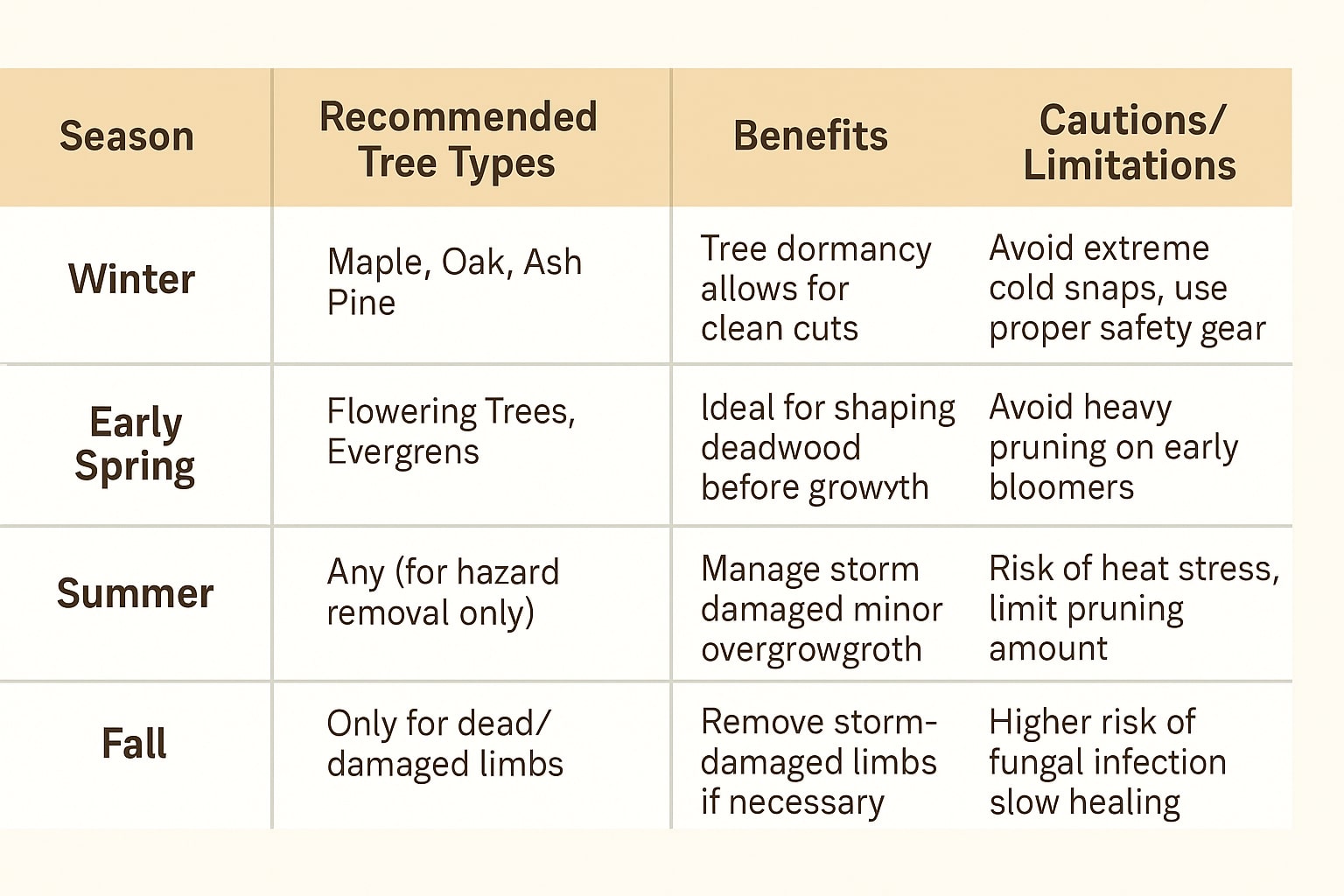
Winter (Late November to Early March)
Best for most trees
Winter is generally the best time to trim trees in Kalamazoo. Trees are dormant, meaning they aren’t actively growing. This reduces stress on the tree and makes pruning cuts cleaner and safer.
Benefits:
- Easier to see branch structure without leaves
- Reduces risk of disease transmission
- Less sap loss and insect exposure
- Encourages robust spring growth
Early Spring (March to mid-April)
Good for selective pruning
This is a fine time for light shaping and removing dead or damaged limbs before full growth begins. Avoid heavy pruning on species that bloom early (like cherry or magnolia) unless necessary.
Summer (June to August)
Use caution
Trimming in summer should be limited to correcting minor issues, removing storm-damaged branches, or eliminating safety hazards. Heavy pruning in this period can stress the tree.
Avoid:
- Cutting during extreme heat or drought
- Removing more than 25% of the tree’s canopy
Fall (September to October)
Not recommended
Fall is typically the worst time to prune trees. Wounds from pruning don’t heal as quickly, and the risk of fungi or decay increases.
Exceptions: Dead or broken limbs from storms may still need to be removed safely.
Trimming Guidelines for Common Kalamazoo Tree Types
Maple Trees
Best trimmed in late winter. Avoid spring pruning to prevent sap loss (maples “bleed” heavily in early spring).
Oak Trees
Prune only in winter to reduce risk of oak wilt disease. Never prune oaks during the growing season.
Pine Trees
Only remove dead or damaged limbs. Prune in late winter for shape control.
Flowering Trees (Dogwood, Cherry, Magnolia)
Trim immediately after blooming in spring or early summer. Trimming before bloom will reduce flowering.
Ash Trees
If still healthy, prune in winter. Always monitor for emerald ash borer damage.
Evergreen Shrubs and Hedges
Early spring is the best time to trim evergreens like arborvitae, yews, and boxwoods before the growth flush. Avoid cutting into old wood that no longer produces new shoots.
Benefits of Trimming Trees at the Right Time
- Longer tree life and better health
- Lower risk of falling branches
- More vibrant spring and summer growth
- Better defense against pests and disease
- Cleaner appearance for your yard and home
- Prevents interference with power lines or structures
Trimming trees strategically can also improve sun exposure to nearby plants or lawns. In neighborhoods with dense canopy cover, such as Oakland Drive or Parkview Hills, trimming can revive the undergrowth and reduce mold buildup caused by shade.
Common Mistakes to Avoid
- Trimming too much too quickly
- Pruning in fall or extreme heat
- Using dull tools or improper cuts
- Cutting too close to the trunk or main branch
- Ignoring signs of disease or rot before trimming
Another common issue in Kalamazoo is neglecting young trees. Early structural pruning within the first 3–5 years helps prevent future problems with weak branch unions or overextended limbs. Young maples and lindens planted along sidewalks should be checked annually.
Does Kalamazoo Require Permits for Tree Trimming?
In most residential areas, no permit is required for trimming trees on your private property. However, if the tree is near a sidewalk, road, or power line, check with:
- City of Kalamazoo Public Services Department
- Your utility provider (for line-clearance safety)
- HOA or neighborhood regulations (if applicable)
The City of Kalamazoo manages right-of-way trees. If your tree is between the street and sidewalk, it’s considered city-maintained and may require permission to trim.
Professional vs. DIY Tree Trimming
While light trimming of small trees or shrubs is safe for most homeowners, larger trees or those near structures should be handled by licensed arborists.
Why hire a pro:
- Proper equipment for high or dangerous limbs
- Reduces risk of property damage
- Expert knowledge of species-specific care
- Clean, healthy pruning cuts for better tree healing
Hiring a professional also ensures compliance with local guidelines and helps preserve native tree species. Arborists in Kalamazoo are familiar with soil types, tree pests common to the region, and seasonal risks like late freezes or high winds.
How Tree Growth Cycles Impact Trimming
Understanding how trees grow helps determine when to trim. Most trees in Michigan enter dormancy in winter and begin active growth in spring.
- Dormant phase (late fall to early spring): Ideal for structural pruning
- Active phase (spring to early fall): Best for light shaping or emergency removal
Growth cycles are particularly important for flowering and fruit-bearing trees. For example, trimming a crabapple tree before it buds can drastically reduce blooms and limit fruiting.
Environmental Benefits of Proper Tree Maintenance
Tree trimming isn’t just about looks or safety-it also benefits the environment.
- Promotes healthy canopies that absorb more CO2
- Reduces likelihood of disease spread in dense areas
- Supports biodiversity by keeping native trees strong
- Prevents overcrowding and root conflict between species
In a green city like Kalamazoo, sustainable tree care contributes to long-term ecological health. This supports local wildlife and keeps urban heat islands in check, especially during warmer summers.
FAQs: Tree Trimming in Kalamazoo
What’s the best month to trim trees in Kalamazoo?
Late January to early March is ideal, especially for oaks, maples, and shade trees. This aligns with the dormant season when trimming causes the least stress.
Can I trim trees during summer in Michigan?
You can, but it’s best to limit summer trimming to hazard removals or light touch-ups. High heat and drought can stress the tree if pruned too heavily.
What tree species in Kalamazoo need special trimming care?
Maples, oaks, and ash trees require seasonal awareness. Oaks should only be pruned in winter to avoid oak wilt. Maples bleed heavily if cut in spring.
Does the City of Kalamazoo regulate tree trimming?
If the tree is near the right-of-way or on public land, yes. Always contact the City of Kalamazoo Forestry Division before trimming city-owned trees.
How do I find a certified arborist in Kalamazoo?
Use the ISA Certified Arborist Directory or ask for local referrals. Look for insured, experienced professionals familiar with Michigan tree species.
Can tree trimming improve storm safety in Kalamazoo neighborhoods?
Absolutely. Trimming reduces the weight of extended limbs and removes weak branches that could break in snow or wind. It’s especially valuable in older areas like Westnedge Hill or Milwood.
Is winter trimming safe for flowering trees in Kalamazoo?
It depends on the species. For trees like lilacs or magnolias that bloom on old wood, winter pruning can remove flower buds. Always prune after bloom for these types.
Should I fertilize my trees after trimming?
Not always. Fertilization depends on soil health, tree age, and species. A soil test from the Kalamazoo County Conservation District can guide you.
Final Thoughts
Knowing when to trim trees in Kalamazoo isn’t just a matter of preference. It’s a professional best practice that protects your investment, your home, and the local environment. Whether you’re maintaining ornamental trees in Bronson Park or preserving century-old maples in the Vine neighborhood, timing and technique are critical.
For expert, local tree trimming service in Kalamazoo, work with certified arborists who understand the weather, regulations, and native species. Well-timed care leads to safer yards, healthier trees, and stronger curb appeal.
Have more questions about tree care in Kalamazoo? Contact our team today-we’re here to help your trees thrive year-round.