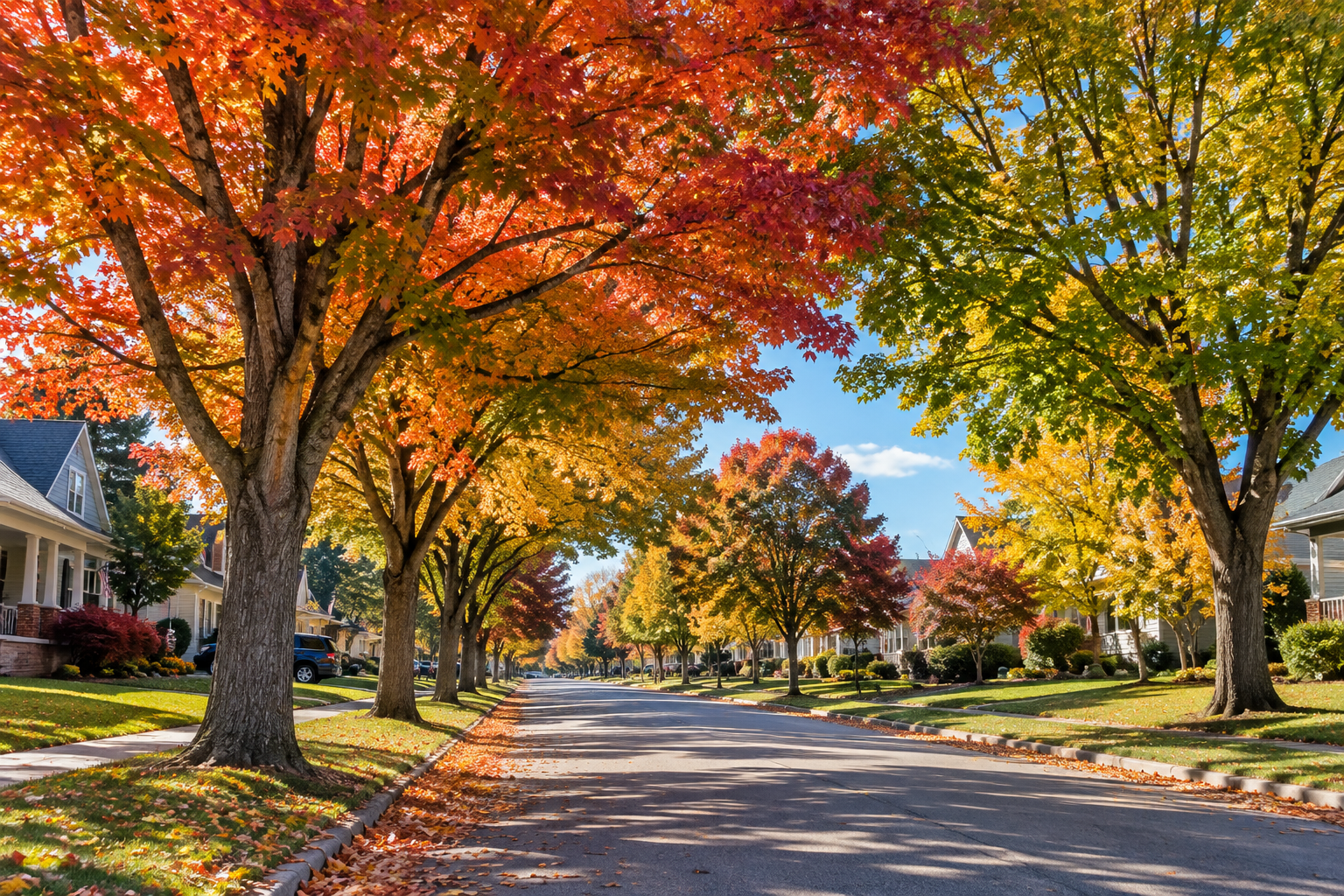
The best places for nature in Battle Creek are Leila Arboretum, Battle Creek Linear Park, the Ott Biological Preserve, Fort Custer Recreation Area, Binder Park, and the W.K. Kellogg Forest near Augusta. Between them you get arboretum gardens, miles of riverside trail, quiet wetland boardwalks, and real state forest land, all within a short drive of downtown. We work among these trees every day, so here’s our rundown of where to go, what you’ll find, and the trees you’ll be walking under.
Leila Arboretum
Leila Arboretum is the best spot in Battle Creek if you love trees. It’s a large arboretum and garden on the west side of the city, with a deep collection of mature and specimen trees mixed in with themed gardens and wide open lawns. You’ll see species here that you almost never find in an average yard, all labeled and easy to walk up to.
It’s worth a visit in any season. Spring brings the gardens to life, summer gives you full shade, and fall turns the big maples and oaks into color. If you want to start recognizing what’s growing around town, this is the place to do it, and our guide to the common trees in Calhoun County pairs well with a walk through the grounds.
Battle Creek Linear Park
Battle Creek Linear Park is the easiest way to get outside without leaving the city. It’s a paved trail system that follows the Kalamazoo and Battle Creek rivers, linking parks, neighborhoods, and green space along the way. Walkers, runners, and cyclists all share it, and you can hop on at plenty of points around town.
Because it runs right along the water, you get shade, river views, and mature trees for most of the route. It’s our go-to recommendation when someone wants a simple, flat outing close to home rather than a drive out to the woods.
Ott Biological Preserve
The Ott Biological Preserve is the quiet one. It’s a natural area set aside for habitat, with woodland and wetland trails that stay calm even when the city parks are busy. This is where you go to watch for birds, native plants, and the kind of undisturbed landscape that’s getting harder to find close to town.
The trails are gentle and good for families or a slow morning walk. Pair it with the Linear Park and you can do an easy paved loop and a more natural trail in the same trip.
Fort Custer Recreation Area
Fort Custer Recreation Area is the big one, a state recreation area between Battle Creek and Kalamazoo with forest trails, lakes, and miles of hiking, mountain biking, and horseback routes. When you want a full day outdoors instead of a quick walk, this is the spot. It’s the largest natural area close to the city by a wide margin.
You’ll find woodland, open meadow, and water all in one place, which makes it popular for hiking in spring and fall and paddling in summer. State recreation areas like this are managed by the Michigan Department of Natural Resources, so check their site for current trail conditions and any fees before you head out.
Binder Park and Binder Park Zoo
Binder Park sits on the south side of Battle Creek and shares its name with the well-known Binder Park Zoo nearby. The park itself gives you trails and green space close to town, while the zoo is a longer, ticketed day out with animals and exhibits. Together they make this corner of the city a favorite for families.
Just know they’re two separate destinations, so decide which one you’re heading to first. For a walk among trees, the park works any day. For the full zoo experience, plan a few hours.
W.K. Kellogg Forest and Bird Sanctuary
A short drive toward Augusta gets you to the W.K. Kellogg Experimental Forest and the nearby Kellogg Bird Sanctuary, both run by Michigan State University. The forest is a managed research woodland with trails winding through tall stands of planted and native trees, and the bird sanctuary is one of the oldest in the country. For serious tree and bird watching, these two are the best in the wider area.
They sit just outside Battle Creek, but the trip is worth it if you like being deep in the woods. We cover this area too, so if you’ve got trees that need attention out that way, see our tree service in Augusta.
What trees will you see around Battle Creek?
On these trails you’ll mostly be walking under oaks, maples, and other hardwoods native to Southwest Michigan. Red and white oaks, sugar and red maples, American beech, shagbark hickory, and black walnut are all common here, along with white pine and the occasional stand of hemlock in cooler, shaded spots. Leila Arboretum is the easiest place to tell them apart, since so many are labeled.
A few you’ll notice are struggling. Ash trees across the county have been hit hard by emerald ash borer, and oaks face pressure from oak wilt, both of which we cover in our guide to the signs of oak wilt and emerald ash borer in Calhoun County. If you want to go deeper on the two signature species of our woods, our post on caring for oaks and maples in Southwest Michigan is a good next read. It’s also worth knowing which trees to keep off your own property, which our guide to dangerous and invasive tree species around Battle Creek breaks down.
When is the best time to enjoy Battle Creek’s outdoors?
Fall is the standout season for nature in Battle Creek, when the oaks and maples turn and places like Leila Arboretum and Fort Custer light up with color. It’s the time of year most locals plan a walk or a drive just to see it. Mid to late October is usually the peak, though it shifts with the weather.
The other seasons each have their draw. Spring brings wildflowers and the first green along the Linear Park, summer is best for the lakes and longer trails at Fort Custer, and winter opens up quiet, bare-canopy walks for anyone who doesn’t mind the cold. Battle Creek’s trees give you a different reason to get outside in every one of them.
Keeping Battle Creek’s trees healthy
The trees that make these places worth visiting need care to stay healthy, and the same goes for the ones in your own yard. As a local tree service, we spend our days working with Battle Creek’s oaks, maples, and pines, from the big ones shading these parks to the ones next to local homes. If yours could use attention, our tree health care team keeps them strong, and our tree trimming crew handles the pruning that keeps mature trees safe and looking their best.
Frequently asked questions
What’s the best nature spot in Battle Creek for trees?
Leila Arboretum is the top pick, with a large labeled collection of mature and specimen trees in one walkable place. For a wilder woodland feel, the Ott Biological Preserve and Fort Custer Recreation Area are the strongest options.
Are there good walking and biking trails in Battle Creek?
Yes. Battle Creek Linear Park is the main paved trail through the city, following the rivers and connecting several parks. Fort Custer Recreation Area adds miles of hiking and mountain biking trails just outside town.
Which nature spots near Battle Creek are good for families?
Binder Park and the Linear Park are easy, family friendly options close to town, and the Kellogg Bird Sanctuary near Augusta is a popular outing with kids. For a bigger day, Fort Custer has trails, beaches, and water in one place.
When is the best time to see fall colors in Battle Creek?
Mid to late October is usually the peak for fall color in the area, though it moves a week or two with the weather. Leila Arboretum, Fort Custer, and the Linear Park are all good places to catch it.
Are Battle Creek’s parks free to visit?
Most city parks and the Linear Park are free, while a state recreation area like Fort Custer requires a Michigan Recreation Passport, and Binder Park Zoo charges admission. Check each location’s site for current fees before you go.
Do you offer tree service near these parks?
Yes. We’re a local Battle Creek tree service and we cover the city, Calhoun County, and surrounding towns like Augusta. If your trees need trimming, health care, or removal, we can help.