It is a common and dangerous misconception that a tree covered in vibrant green leaves is a safe tree. We tend to equate foliage with structural integrity, assuming that if the biological engine is running, the chassis must be sound. However, in the realm of professional arboriculture, some of the most catastrophic failures occur in specimens that appeared perfectly healthy just moments before they fell.
Understanding the distinction between biological health and structural stability is vital for any property owner. A tree can be thriving in terms of its ability to process sunlight and water while simultaneously being a ticking time bomb due to internal decay, root loss, or poor architectural growth. This guide explores the hidden red flags that indicate a tree may need removal, even when it looks beautiful from the curb.
The Biology of the Hollow Shell
To understand why a green tree can be dangerous, one must understand how a tree grows. The living, functional part of a tree trunk is actually a very thin layer just beneath the bark called the cambium. This layer is responsible for transporting water up from the roots and sugars down from the leaves. As long as this outer ring is intact, the tree can produce a full, lush canopy.
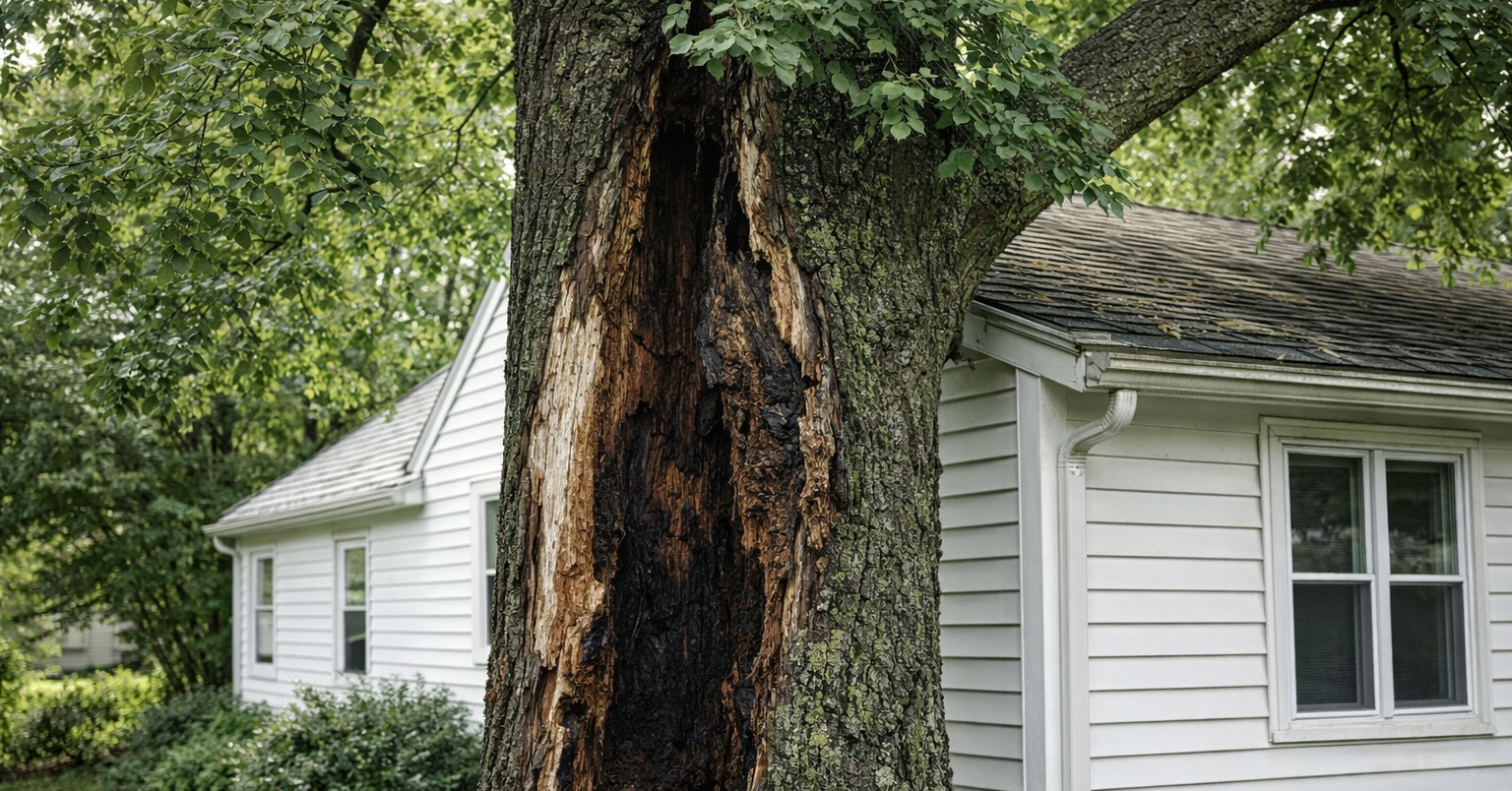
The center of the tree, known as the heartwood, is technically dead tissue. Its sole purpose is to provide mechanical support. Because the heartwood is not involved in the tree metabolic processes, it can rot away completely without affecting the color or density of the leaves. An arborist might encounter a massive oak that looks spectacular, only to find that it is essentially a hollow tube. While a hollow tree is not always an immediate candidate for removal, if more than 30 percent to 40 percent of the trunk interior is missing or decayed, the tree loses the structural strength required to withstand high winds or heavy snow.
The Silent Threat of Root Decay
The root system is the anchor of the tree, extending far beyond the drip line of the branches. Often, a tree remains green and growing even as its foundation is rotting beneath the soil. This is particularly common in urban environments where construction, soil compaction, or poor drainage creates a hospitable environment for root-rotting fungi.
One of the most telling signs of root issues is the presence of fungal fruiting bodies, such as mushrooms or conks, at the base of the trunk or growing directly out of the root flare. These fungi do not just live on the surface; they are the visible fruit of a massive network of mycelium that is actively consuming the wood fibers of the roots.
Another subtle sign is soil heaving. If you notice the ground lifting or cracking on one side of a tree, especially after a storm, it indicates that the root plate is physically tilting and losing its grip. A tree in this state is no longer an asset; it is a liability. Even if the leaves are a perfect shade of emerald, a tree with a compromised root system can topple without warning on a perfectly calm day.
Architectural Defects and Co-Dominant Stems
Sometimes, the danger has nothing to do with disease or rot and everything to do with how the tree was structured as it grew. One of the most common reasons for the removal of a healthy-looking tree is the presence of co-dominant stems. This occurs when a tree forks into two or more main trunks of similar size.
When these trunks form a tight V-shape, a condition called included bark often develops. Instead of the wood fibers of the two trunks knitting together for strength, the bark grows inward, creating a physical wedge between the stems. As the tree grows larger and heavier, the weight of the canopy acts as a lever, pulling the two stems apart. In a heavy wind or ice storm, the pressure becomes too much, and the tree splits down the middle. Because this is a structural flaw rather than a biological illness, the tree will look perfectly healthy right up until the moment it breaks in half, potentially crushing a roof or a vehicle.
The Impact of Stress and Pests
Certain pests and diseases work from the inside out, leaving the exterior appearance relatively unchanged until the damage is irreversible. The Emerald Ash Borer remains a primary threat in Michigan. According to the Michigan Department of Agriculture and Rural Development (MDARD), this invasive beetle kills ash trees by disrupting the cambium layer, often leaving the tree structurally brittle long before the canopy turns brown.
Furthermore, trees that have undergone significant environmental stress, such as a severe drought or a nearby construction project that severed major roots, may enter a state of decline that is not immediately visible in the leaves. Trees are masters of resource management; they may use their last reserves of energy to produce one final flush of leaves before the structural system fails. This is often referred to as a stress crop or a survival response.
When to Call a Professional
Because many of these issues are invisible to the untrained eye, regular inspections by a Certified Arborist are essential to identify internal decay or root loss before a catastrophic failure occurs. Professionals ensure all work follows the ANSI A300 Tree Care Standards, the national science-based benchmarks for tree maintenance that prohibit harmful practices like ‘topping’ or ‘lion-tailing’. They might use a mallet to sound the trunk, listening for hollow echoes, or utilize a resistograph, which uses a tiny needle to measure the density of the wood inside the trunk.
If an arborist determines that a tree has significant internal decay or a high probability of structural failure, removal is often the only responsible course of action. While it is heartbreaking to cut down a tree that appears full of life, the risk of property damage or personal injury is a far greater concern.
Key Summary of Red Flags:
- Fungi at the Base: Mushrooms or shelf-like growths at the bottom of the tree indicate root or butt rot.
- Deep Cracks: Vertical cracks that penetrate deep into the wood or go all the way through the trunk.
- Cavities: Large holes where branches have fallen off or where decay has hollowed out the interior.
- Deadwood: Large, brittle branches in the upper canopy, even if the rest of the tree is green.
- Tight V-Unions: Trunks that split in a sharp V rather than a wide U, indicating a weak attachment point.
Conclusion
A tree is more than just its leaves. It is a complex mechanical structure that must support thousands of pounds of weight against the relentless forces of gravity and wind. A healthy-looking canopy is a sign of good nutrition and hydration, but it is not a guarantee of safety. By paying attention to the trunk, the root flare, and the overall architecture of the tree, property owners can identify hidden dangers before they become disasters. Proactive removal of a structurally unsound tree is a necessary part of responsible landscape management, ensuring that your property remains both beautiful and safe for years to come.