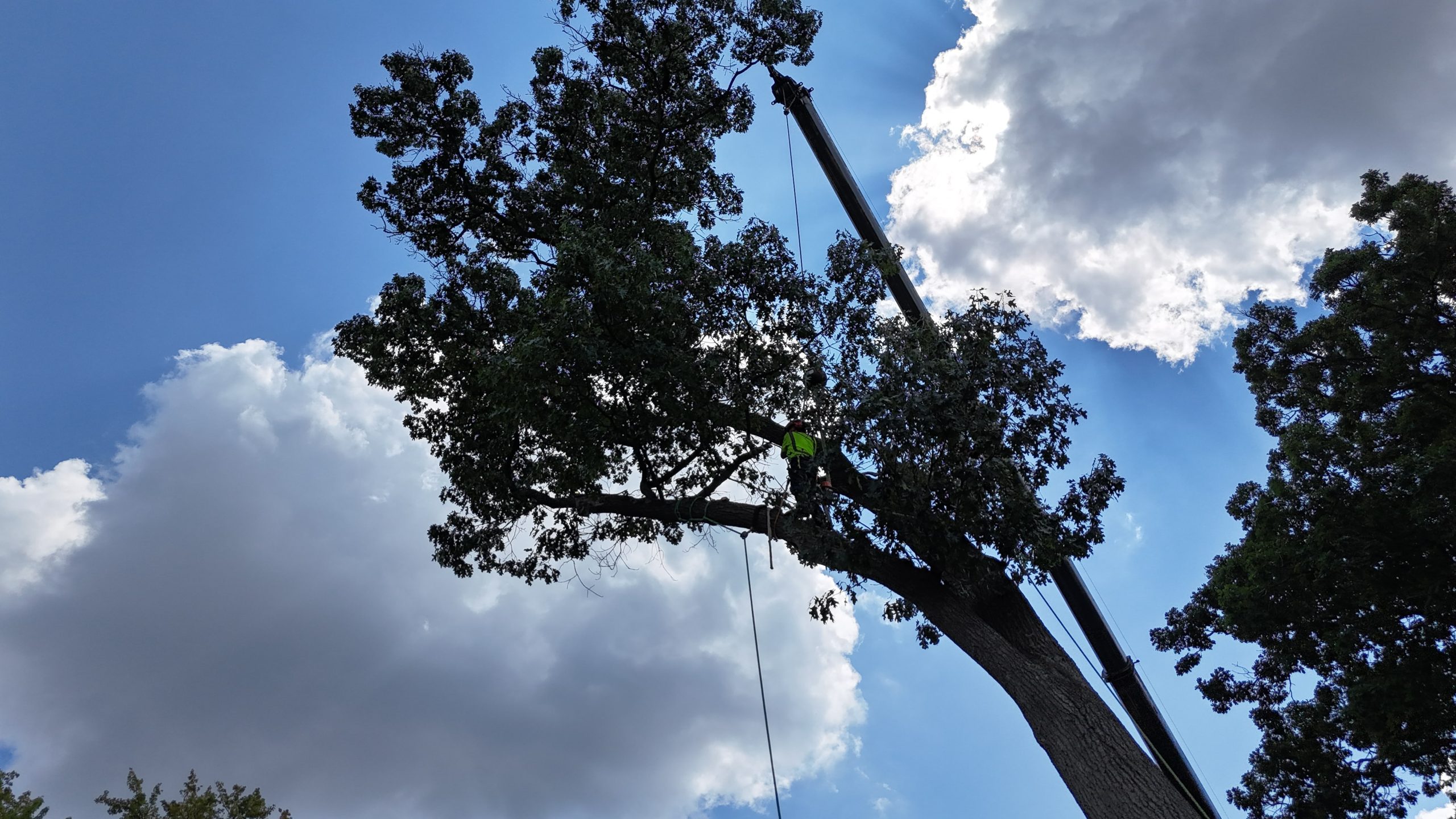
Trees add beauty, shade, and value to your property. But when a tree becomes sick or starts to die, it can quickly turn from an asset into a liability. Weak trees are more likely to fall during storms, drop dangerous branches, or spread disease to other plants. Knowing the early warning signs of tree decline can help you act quickly, protect your property, and avoid costly damage. For homeowners in Calhoun County and Kalamazoo County, spotting these issues early and working with a trusted tree service like Brawner’s Tree Service can make all the difference.
Why Early Detection of Tree Health Problems Is So Important
Catching problems with your trees before they become severe is critical for safety, property value, and long-term tree health.
- Safety risks are often the biggest concern. A tree that is weakened by disease, pests, or decay is more likely to lose limbs or fall completely. Falling branches can damage vehicles, roofs, fences, and even injure people. In areas like Calhoun and Kalamazoo County, where storms can bring heavy winds, unhealthy trees become even more dangerous.
- Property value is another key factor. A lush, healthy yard increases curb appeal and makes your home more attractive to buyers. On the other hand, dead or dying trees create an eyesore and may even reduce your property value.
Finally, sick trees often decline quickly. What starts as a small issue, like peeling bark or a cluster of mushrooms near the roots, can soon turn into major structural problems. Early detection allows you to take preventative measures such as pruning, treatment, or professional inspection.
The 10 Warning Signs Your Tree May Be Sick or Dying
Below are ten of the most common signs that indicate your tree may be in trouble. If you notice any of these issues on your property, especially in Calhoun County or Kalamazoo County where storms and soil conditions can make trees vulnerable, it is wise to schedule an inspection.
1. Dead or Falling Branches
One of the earliest signs of trouble is frequent branch loss. While it is natural for small twigs to drop, large dead limbs are a red flag. A tree shedding big branches is often under stress and may be trying to conserve resources. These branches also pose a danger to cars, roofs, and people walking underneath. If you notice that large limbs are snapping or the tree canopy looks bare on one side, it may be time to call in a professional.
2. Cracks in the Trunk or Major Limbs
Structural cracks weaken a tree and increase the risk of collapse. These splits often form after storms or as a result of internal decay. Cracks running vertically up the trunk or along large branches should never be ignored. They indicate the tree’s structure is compromised, which makes it hazardous in high winds. In some cases, trimming or bracing may help, but severe cracking often signals a dying tree that needs removal.
3. Peeling or Missing Bark
Healthy trees naturally shed small amounts of bark, but large patches of missing or peeling bark signal trouble. Exposed wood makes the tree vulnerable to disease and pests. In many cases, missing bark is a symptom of disease or stress. If you run your hand along the trunk and notice soft, spongy areas or deep wounds, it may be a sign of decay within the tree.
4. Fungal Growth at the Base
Mushrooms and fungal conks growing at the base of your tree are signs of internal rot. While some fungi grow on healthy trees, clusters of mushrooms around the roots usually indicate decay inside the trunk. This weakens the tree from the inside out and can lead to sudden collapse. Homeowners in Calhoun and Kalamazoo County often notice mushrooms appearing after wet seasons. If you see them near your tree, it is time to have a professional inspection.
5. Sparse or Discolored Leaves
A thinning canopy is one of the easiest warning signs to spot. If your tree’s leaves are turning yellow, brown, or falling off outside of normal seasonal changes, it may be stressed or diseased. Compare your tree’s canopy to others nearby. If it looks sparse or dull while others are full and green, that is often a sign the tree is struggling. This could be due to nutrient deficiency, pests, or root damage.
6. Premature Leaf Loss
If your tree drops its leaves earlier than usual, it may be reacting to stress. Healthy trees hold their leaves until late in the season, while sick ones shed early as a survival mechanism. Premature leaf loss is common in trees facing root problems, drought stress, or disease. In Calhoun and Kalamazoo County, where seasonal changes are dramatic, it is important to note whether your tree is losing leaves well before others in your area.
7. Hollow or Soft Spots in the Trunk
Hollow areas in the trunk are a serious issue. While some trees can survive with hollow sections, extensive internal rot compromises stability. Soft wood is another clear danger sign. Tap on the trunk with a tool, and if it sounds hollow or feels soft when pressed, the structural integrity is likely compromised. Trees in this condition often need to be removed to prevent collapse.
8. Root Damage or Visible Rot
Roots are the foundation of a tree. When they are damaged, the tree cannot absorb water or nutrients effectively. Visible root rot often shows up as decayed, mushy wood near the soil line. You may also notice soil heaving or roots pulling up from the ground after storms. Since roots anchor the tree, any damage can lead to sudden tipping or falling.
9. Infestations of Insects or Pests
Insects are drawn to weak trees. Carpenter ants, bark beetles, and borers often infest trees that are already in decline. Holes in the bark, piles of sawdust, or visible insects crawling on the trunk are strong indicators of infestation. While some pest problems can be treated, infestations often mean the tree is already compromised. Professional treatment is essential to determine if the tree can be saved.
10. Leaning or Sudden Tilt
A tree that starts leaning unexpectedly is extremely dangerous. While some trees naturally grow at an angle, a sudden lean signals instability in the root system or trunk. If the lean is increasing or soil is lifting on one side of the base, the tree may be on the verge of falling. Leaning trees near homes, driveways, or power lines should be addressed immediately by a tree service.
When to Call a Professional Tree Service
Trying to diagnose or handle a sick tree on your own can be risky. Tree health issues are not always visible, and cutting or climbing trees without the right training and equipment can be dangerous. A professional tree service has the expertise to evaluate whether a tree can be saved with treatment or if it poses too great a risk to remain standing.
Tree service professionals assess the health of the trunk, canopy, and root system. They can recommend pruning, fertilization, or safe removal if necessary. In Calhoun and Kalamazoo County, local knowledge also matters. Professionals familiar with the region’s soil, climate, and common pests can provide more accurate advice. Brawner’s Tree Service offers inspections and safe removal, giving homeowners peace of mind and protecting properties from costly damage.
How Brawner’s Tree Service Helps
At Brawner’s Tree Service, we specialize in diagnosing and resolving tree health issues for homeowners in Calhoun County and Kalamazoo County. Our team provides:
- Tree health inspections to identify early warning signs of disease or decay.
- Trimming/Pruning services to remove weak or damaged limbs safely.
- Tree removal for trees that pose safety hazards.
- Emergency storm response when trees fall unexpectedly.
With years of local experience, Brawner’s understands the unique challenges that trees face in this area, from heavy snow to summer storms. Whether your tree shows one or several of the warning signs above, our team can assess the situation and provide a clear plan for treatment or removal.
Protecting the Trees on Your Property
Healthy trees add shade, improve air quality, and boost curb appeal. Protecting them requires regular care and attention. Here are a few preventative steps homeowners can take:
- Schedule annual tree inspections to catch issues early.
- Mulch around the base to retain soil moisture and prevent damage from lawn equipment.
- Water deeply during dry spells to reduce stress.
- Watch for changes in leaf color, bark, or growth patterns.
FAQs on Tree Health and Safety
Is a single symptom enough to worry about?
One symptom can be seasonal or species-specific, but multiple concurrent signs such as fungal conks, deadwood, peeling bark, lean, and soil heave strongly indicate structural or systemic issues. If in doubt, prioritize a professional assessment, especially near homes, driveways, and play areas.
Can mushrooms at the base be harmless?
Fungal fruiting bodies at the base typically indicate decay in structural wood. While identification matters, treat visible conks on trunk or root flare as a structural warning until assessed. Basal decay reduces load-bearing capacity and often correlates with higher failure risk under wind or saturation.
My evergreen is browning normal or not?
Some inner needle drop is normal, but widespread browning, tip dieback, or entire sectors turning color out of season suggests stress from root problems, pests, or disease. Compare to nearby specimens. If others look normal, schedule an inspection.
When should a leaning tree be removed?
If the lean is new or increasing, with soil fissures, root plate movement, trunk cracks, or targets below, removal is often the safest choice. Long-standing, unchanged leans with sound roots and no defects may be monitored under an arborist’s guidance.
Will pruning save a declining tree?
Pruning can remove hazards and rebalance loads, but it cannot reverse advanced root decay or major trunk defects. Where core structure is compromised, removal or significant risk reduction strategies are typically recommended.
Can young trees be straightened?
Yes. Proper two- or three-stake systems with flexible ties, plus soil correction and watering, can help young trees re-establish vertical growth. Remove or adjust supports as roots anchor to prevent girdling and encourage trunk strength.
Do Not Ignore the Signs of a Dying Tree
Homeowners across Calhoun County and Kalamazoo County should schedule a professional tree health inspection at the first signs of decline. Brawner’s Tree Service offers expert tree diagnosis, pruning, and affordable tree services in Battle Creek and Kalamazoo, ensuring your property stays safe and well-maintained.
Protect your home, your family, and your investment – don’t wait for the next storm to reveal the danger. Call today for a qualified inspection and lasting peace of mind.