Key Takeaways
- Not every tree showing signs of stress or damage needs to be removed; many can recover with proper treatment.
- Key indicators like the percentage of canopy dieback, trunk condition, and root health help determine whether a tree is salvageable.
- Some structural issues, like deep trunk cracks or major root loss, generally point toward removal for safety reasons.
- A professional assessment provides a more accurate picture than visual inspection alone, especially for internal decay.
- Catching problems early gives homeowners more options than waiting until a tree’s decline is advanced.
A tree showing signs of damage or stress may not always need to be removed, as proper care can often help it recover. Factors such as canopy loss, trunk condition, and root health can indicate whether a tree can be saved, while severe cracks or significant root damage may make removal necessary. Since some problems, such as internal decay, aren’t visible, a professional assessment is often the best way to determine the right course of action. Catching issues early can also give homeowners more options for treatment.
Deciding whether a struggling tree can be saved or needs to come down is one of the more difficult calls a homeowner faces. Removing a tree unnecessarily means losing years, sometimes decades, of shade, aesthetic value, and the benefits a mature tree provides. On the other hand, keeping a genuinely hazardous tree standing can put your home, family, and property at risk.
Understanding the key signs that separate a salvageable tree from one that needs removal helps homeowners make this decision with more confidence.
Start with the Percentage of Canopy Affected
Some of the clearest indicators of a tree’s overall health is the condition of its canopy.
- Small amount of dieback: If dead or dying branches affect only a small portion of the canopy, the tree may have a good chance of recovery.
- Localized dieback: Dieback limited to one area may indicate a specific pest, disease, or environmental stress that can potentially be identified and treated.
- More than 50% dieback: When a large portion of the canopy is affected, the tree’s ability to recover becomes significantly lower.
- Reduced leaf capacity: Losing most of its leaves limits the tree’s ability to produce energy through photosynthesis.
- Continued decline: Severe canopy loss can prevent the tree from repairing itself, even after the original cause of stress has been addressed.
Evaluate the Trunk for Structural Integrity
The trunk is the tree’s primary structural support, and its condition plays a major role in whether a tree can safely be retained.
- A trunk with a small, localized wound or minor bark damage is often not a significant concern and can heal over time.
- A trunk with large cavities, extensive decay, or a crack that runs vertically for a significant length is a much more serious concern, since these conditions compromise the tree’s ability to support its own weight and canopy.
One useful guideline that a professional tree service firm in Battle Creek, MI sometimes references is that when decay affects roughly a third or more of a trunk’s diameter, the risk of structural failure increases substantially. However, this threshold can vary depending on the tree’s species, size, and how the decay is distributed. This is one of the areas where a professional assessment, sometimes including internal decay testing, provides much more reliable information than a visual inspection alone.
Check for Fungal Growth
Fungal growth on or near the base of a tree, particularly shelf-like growths called conks, is one of the more reliable visual indicators of internal decay. By the time these fungal bodies become visible, the decay they represent has often been developing internally for a considerable period. The presence of fungal growth doesn’t automatically mean a tree must be removed, but it does warrant a professional assessment to determine how much structural wood has been compromised and whether the tree remains safe to retain.
Assess Root Health and Stability
A tree’s root system anchors it and supplies the water and nutrients needed for growth and recovery.
Signs of root problems include –
- soil heaving or cracking around the base of the trunk
- a new or worsening lean
- exposed roots that appear to have pulled from the ground, and
- fungal growth at the root flare or base of the trunk.
Root damage is particularly concerning because it directly affects the tree’s structural stability, not just its long-term health. A tree with significant root damage can fail suddenly, even if the canopy and trunk otherwise appear reasonably healthy, which is why any sign of root disturbance should prompt a professional evaluation rather than a wait-and-see approach.

Consider the Tree’s Location

A tree’s location relative to your home, driveway, and other frequently used areas affects how much risk tolerance is appropriate. A declining tree in a far corner of a large property, away from structures and walkways, may be reasonable to monitor over time even with some level of risk, since a failure would be unlikely to cause significant harm. The same level of decline in a tree standing directly over a home, patio, or driveway represents a much higher risk and generally warrants a more conservative approach, favoring removal if there is meaningful uncertainty about the tree’s stability.
Identify the Underlying Cause When Possible
Understanding why a tree is struggling can inform whether treatment is likely to help. Some causes of tree stress, such as – a temporary drought period, minor storm damage, or a treatable pest infestation caught early, are often addressable, and the tree has a reasonable chance of recovering once the stressor is managed.
Other causes, such as – advanced internal decay, extensive root loss, or infestation by a pest with no effective treatment, such as an advanced emerald ash borer infestation, generally do not respond to intervention, and removal becomes the more realistic path forward.
When Treatment and Support Options Make Sense
For trees that show some signs of stress but retain adequate structural integrity, several treatment and support options may extend the tree’s life and safety.
- Structural pruning can reduce weight on weak limbs and improve the tree’s overall form.
- Cabling and bracing can provide additional support for trees with included bark or split unions, helping distribute stress across a stronger anchor point.
- Addressing soil compaction, adjusting watering practices, or treating an identified pest or disease can also support a stressed tree’s recovery when the underlying issue is treatable.
These interventions work best when applied proactively, before a tree’s condition has progressed to the point of significant structural compromise, which is part of why regular monitoring and early professional assessment matter.
When Removal Is the Safer Choice
Certain conditions generally point toward removal rather than continued treatment. These include –
- extensive canopy dieback affecting the majority of the tree
- significant trunk decay or cavities affecting a large portion of the trunk’s diameter
- deep or widening cracks in the trunk or major limb unions
- substantial root damage or a sudden, unexplained lean, and confirmed infestation by a pest
- disease with no realistic treatment option remaining
When several of these factors are present together, the case for removal becomes stronger, particularly for trees located near structures or frequently used areas of the property.
The Value of a Professional Assessment
While homeowners can learn to recognize many of the visual warning signs discussed here, a professional arborist brings tools and experience that go beyond what’s visible from the ground. This can include –
- tapping or probing to assess internal decay
- evaluating root flare conditions more thoroughly, and
- drawing on experience with how specific local species typically respond to various types of stress and damage.
A professional assessment often reveals a more complete picture than a homeowner’s visual inspection alone, which is particularly valuable for a decision as consequential as whether to remove a mature tree.
Making the Decision with Confidence
Ultimately, the decision to save or remove a tree comes down to weighing the likelihood of meaningful recovery against the level of risk the tree poses if it fails.
- A tree with isolated, treatable issues and no significant structural compromise is often a reasonable candidate to save, particularly with professional support.
- A tree with extensive, compounding problems, especially one located near a structure, generally represents too much risk to justify keeping, even with the loss of shade and character that removal represents.
Brawner’s Tree Service can assess your tree’s overall condition before you decide whether to save or remove it. Our team examines the canopy, trunk, branches, root area, and visible signs of decay or disease. We also consider the tree’s location and potential risks to nearby homes, driveways, and other structures.
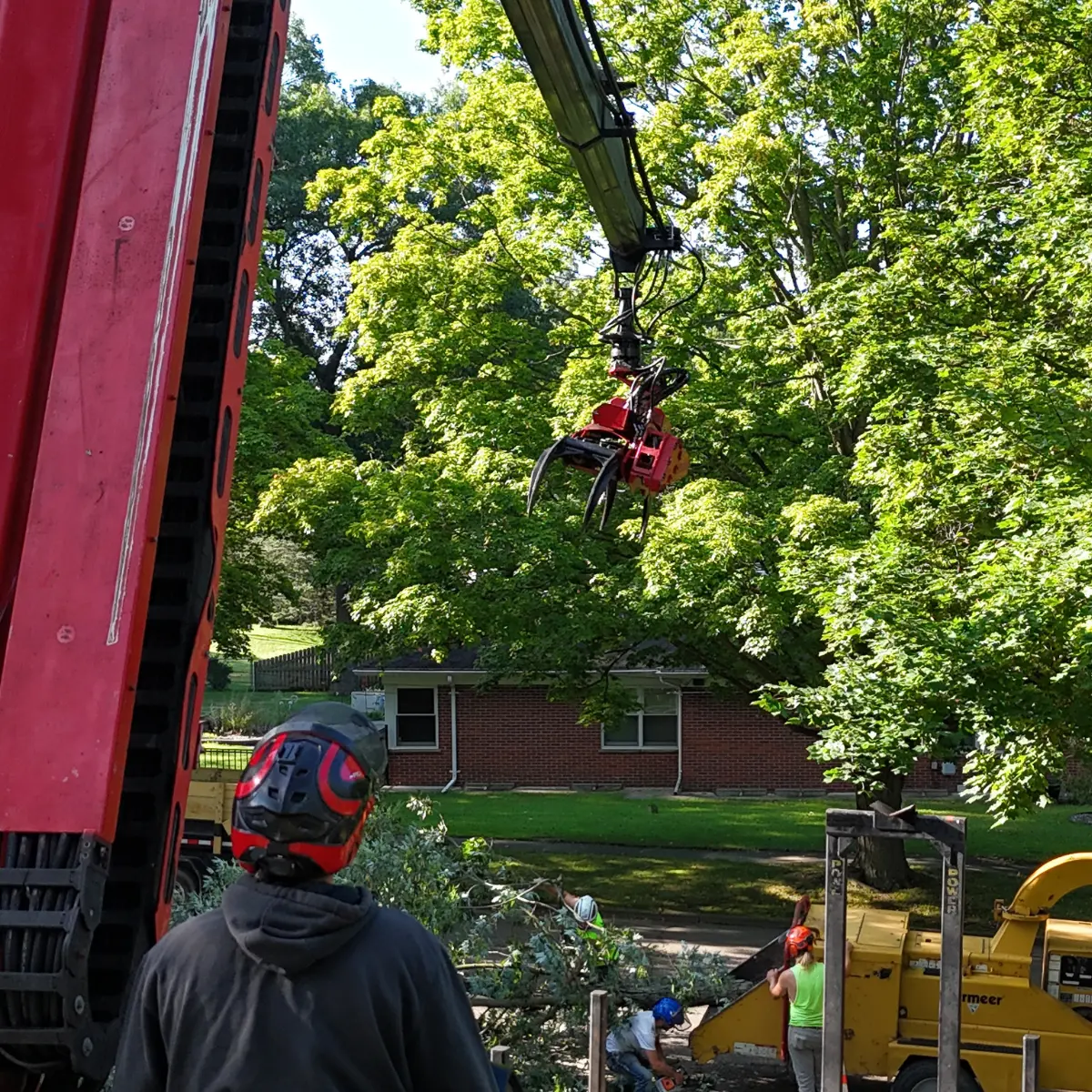
If the tree can be safely preserved, we can recommend options such as tree trimming, tree health care, or structural support. If removal is the safer choice, our experienced crew can handle the job using professional equipment and safe removal techniques.
As a licensed and insured tree service with 45 years of combined experience, Brawner’s Tree Service helps homeowners make informed decisions based on the tree’s condition. Our goal is to protect your property while preserving healthy trees whenever practical and safe.
Frequently Asked Questions About Saving or Removing a Tree in Battle Creek, MI
How much canopy dieback means a tree probably can’t be saved?
Dieback affecting more than roughly half of a tree’s canopy generally indicates a significantly reduced chance of recovery, though a professional assessment provides more specific guidance.
How does a tree’s location affect the save-or-remove decision in Battle Creek, MI?
Trees near structures or frequently used areas warrant a more conservative approach, since the consequences of failure are more significant than for a tree in an open area.
Does fungal growth on a tree always mean it needs to be removed?
Not always, but it typically indicates internal decay and warrants a professional assessment to determine how much structural wood has been affected.
Can a leaning tree be saved with cabling?
Sometimes, if the trunk and root system are otherwise sound; a professional assessment can determine whether cabling is a safe and effective option.
What is included bark, and why does it affect a tree’s stability?
Included bark occurs when two limbs grow too closely together, trapping bark and creating a weaker union that is more prone to splitting under stress.
Is it worth treating a tree with an early-stage pest infestation?
Often, yes, especially if caught early and the pest has effective treatment options; a professional can advise on the tree’s specific situation.
How can I tell if root damage has occurred?
Signs include soil heaving or cracking near the base, a new or worsening lean, exposed roots, and fungal growth at the root flare.
Why is a professional assessment more reliable than a visual check?
Professionals can evaluate internal decay, root flare conditions, and species-specific risk factors that aren’t always visible during a homeowner’s visual inspection.
Summary Checklist: Save-or-Remove Tree Evaluation
| Evaluation Area | What to Confirm |
| Canopy dieback | Estimate percentage affected and whether it’s spreading |
| Trunk condition | Check for cavities, cracks, and extent of visible decay |
| Fungal growth | Note presence and location of any conks or fungal bodies |
| Root health | Look for soil heaving, exposed roots, or new leaning |
| Tree location | Consider proximity to structures and frequently used areas |
| Underlying cause | Identify whether the stressor is treatable |
| Professional input | Schedule an assessment for uncertain or high-risk cases |
Final Advice
If you notice changes in a tree, avoid making a removal decision based on appearance alone. Have concerning trees inspected early, especially if they are near your home, driveway, or other frequently used areas. Avoid pruning, cutting, or attempting to stabilize a severely damaged tree yourself, as this can increase the risk of injury or further damage. If the tree has minor issues, ask a professional whether treatment or corrective pruning could extend its life.
For trees showing serious structural concerns, get a professional risk assessment before deciding what to do. Acting early can give you more options and may prevent a manageable problem from becoming a costly emergency. When you are unsure, Brawner’s Tree Service can evaluate the tree and help you choose the safest and most practical course of action.