Key Takeaways
- The April 15th Deadline: Pruning Oaks between April 15th and July 15th significantly increases the risk of fatal Oak Wilt infection in Michigan.
- Vector Prevention: Nitidulid beetles are attracted to fresh pruning wounds and carry deadly fungal spores that can kill a tree in weeks.
- Rapid Mortality: Once infected, a mature Red Oak can die within a single season, creating an immediate and expensive property hazard.
- Dormant Advantage: Pruning during the cold winter months allows the tree to begin the healing process before disease-carrying pests emerge.
- Community Safety: Oak Wilt spreads through interconnected root systems; one poorly timed cut can threaten every Oak in your Battle Creek or Kalamazoo neighborhood.
If you are a new homeowner in Battle Creek, Kalamazoo, or Portage, you likely have at least one majestic Oak anchoring your landscape. In Southwest Michigan, these trees provide more than just shade; they are a vital part of our local ecosystem. However, there is a “hidden” clock ticking for every Oak owner in Calhoun and Kalamazoo Counties.
Common Tree Problems New Homeowners Overlook
Many new homeowners move in and immediately want to “tidy up” the yard by trimming overhanging branches. Unfortunately, doing this to an Oak in late spring is the biological equivalent of leaving your front door open during a pest infestation.
- The Invisible Threat of Nitidulid Beetles: These tiny “sap beetles” are the primary movers of Oak Wilt. They are attracted to the smell of fresh sap from a pruning cut or a storm-damaged limb. If a beetle has recently visited an infected tree, it carries fungal spores on its body. When it lands on your freshly pruned Oak, it inoculates the tree with the disease. These beetles become active precisely as the weather warms up in mid-April.
- Root Graft Transmission: New homeowners often don’t realize that their trees are “talking” to the neighbors’ trees underground. Oaks of the same species often graft their roots together. This means that if you prune your tree at the wrong time and it catches Oak Wilt, the fungus will travel through the roots and can potentially kill every Oak on your block.
Why Oaks Become Emergencies
An Oak Wilt infection isn’t a slow decline; it is a rapid vascular shutdown. The tree tries to protect itself by plugging its own water-conducting vessels, essentially committing suicide to stop the fungus.
- Rapid Structural Failure: In the Red Oak family (those with pointed leaf lobes), death occurs within 3 to 6 weeks of infection. Because the tree dies so quickly, the wood dries out rapidly and becomes brittle. This creates a “standing dead” hazard that is prone to dropping massive limbs on roofs, driveways, or power lines during Michigan’s volatile summer storms.
- The “Pressure Mat” Phenomenon: Once an Oak dies from Wilt, the fungus produces “fruiting mats” under the bark that smell like fermenting fruit. This scent attracts even more beetles, creating an emergency for every other healthy tree on your property.
Emergency Tree Services for New Homeowners
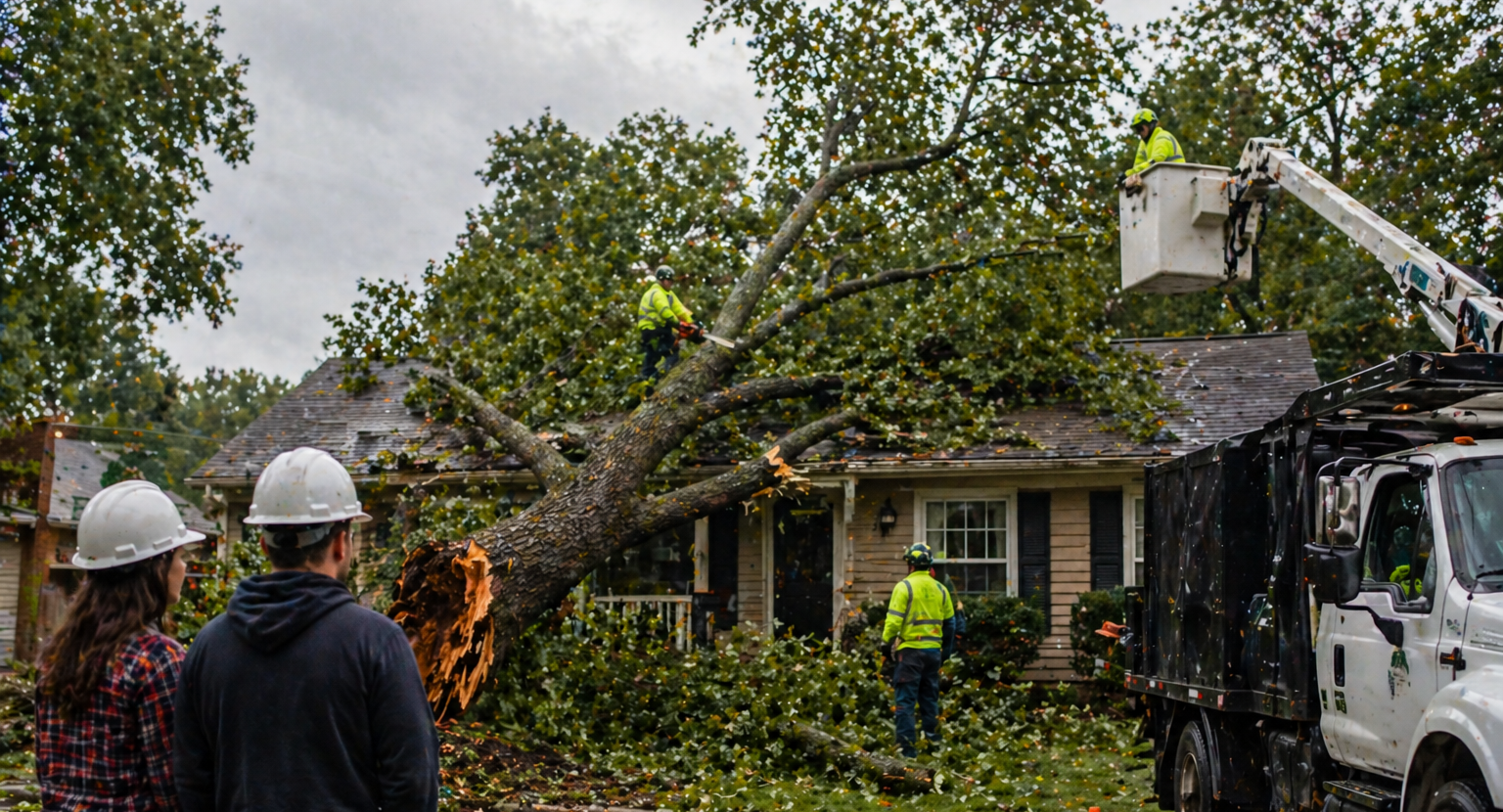
If you miss the April 15th deadline and a storm breaks a large Oak limb, you cannot simply leave the wound exposed. Emergency tree services for new homeowners are required to manage high-risk wounds during the danger window. These services include:
- Immediate Wound Sealing: Using specialized tree paint to “hide” the sap smell from beetles (a rare exception to the “no sealer” rule).
- Disease Diagnosis: Expertly identifying if a tree is showing the bronze, wilting leaves characteristic of the fungus.
- Selective Thinning & Management: Assessing forest health to promote biodiversity and reduce fire hazards through forestry management.
- Urgent Removal and Disposal: Properly hauling away and disposing of infected wood to prevent the formation of spore mats.
A Professional Tree Service firm like Brawner’s Tree Service helps homeowners navigate this “Double Threat” by deploying ISA-Certified Arborists who utilize professional-grade systemic trunk injections to kill EAB larvae while simultaneously providing deep-root watering and fertilization to restore the health of drought-stressed heritage trees.
3 Reasons to Prune Your Michigan Oaks Before April 15th
1. To Beat the “Beetle Bloom.”
Nitidulid beetles emerge from the soil as soon as temperatures consistently hit the 40s and 50s. By finishing your pruning in February or March, the tree has time to “callus over” the wound. A dried-out cut is far less attractive to beetles than a fresh, “bleeding” wound made in May or June.
2. Maximum Structural Visibility
In Southwest Michigan, Oaks don’t leaf out until late spring. Pruning before April 15th allows our team to see the “skeleton” of the tree clearly. This makes it easier to spot V-shaped unions, hidden cracks, and deadwood that would be obscured by heavy foliage later in the year.
3. Reduced Energy Stress
Spring is an energy-intensive time as Oaks push out new leaves and catkins. Pruning during this time creates a “double stress” – the tree must heal a wound while simultaneously fueling new growth. Dormant pruning (before April 15th) ensures the tree’s energy reserves remain in the trunk and roots where they belong.
Real-World Field Insights
Last year, we assisted a new homeowner in Kalamazoo who had hired an uncertified contractor to “limb up” a Red Oak in late May. By July, the canopy was thinning, and the ground was littered with bronze-edged leaves. A lab test confirmed Oak Wilt.
Lesson: Not only did the homeowner lose a 70-year-old tree, but the cost of the emergency removal and the measures taken to save the surrounding Oaks was three times the cost of a standard dormant prune. Brawner’s Tree Service possesses 45 years of combined experience needed to navigate Michigan’s strict pruning timelines.
Placement and Long-Term Safety
- The “July 15th” Rule: While April 15th starts the danger zone, the risk remains high through mid-July. If you have a storm emergency in June, call a professional immediately.
- Identify Your Species: Red, Black, and Pin Oaks are highly susceptible. White and Bur Oaks are more resistant but can still harbor and spread the fungus.
- Firewood Safety: Never move Oak firewood from one area to another. Our firewood services provide properly seasoned wood, but we always emphasize local sourcing to prevent disease spread.
Frequently Asked Questions
How do I know if I need emergency tree services?
If an Oak limb breaks between April and July, it is a biological emergency. The wound must be sealed within hours to prevent beetles from infecting the tree.
Can Oak Wilt be cured?
There is no cure once a Red Oak shows symptoms. Prevention through dormant pruning and systemic tree health care is the only effective strategy.
What does Oak Wilt look like?
Leaves turn brown or “bronze” starting at the edges and moving toward the center, often falling while still partially green.
Is April 15th a strict date?
It is the standard guideline, but an unusually warm March can move the “beetle bloom” earlier. We recommend finishing Oak work by late March to be safe.
Are all Michigan trees at risk?
No, Oak Wilt only affects the Oak family. Your Maples, Pines, and fruit trees are safe from this specific fungus.
Do you offer discounts for Oak pruning?
Yes! We offer Teacher, Nurse, First Responder, and Military discounts. Contact us to see how we can help protect your Oaks affordably.
Conclusion
April 15th is the “Day of Defense” for your Oak trees in Battle Creek and Kalamazoo. By completing your pruning in the dormant winter months, you are protecting your home’s value and our local Michigan canopy. If you’ve missed the window or have a storm-damaged oak, don’t take a DIY risk. Professional care and emergency tree services for new homeowners are the only way to navigate the high-stakes world of Oak Wilt.