After a storm in Battle Creek, it is common to find broken limbs, leaning trees, or branches scattered across the yard. Some damage is obvious, but other risks are hidden and can become dangerous days or weeks later. Knowing what to do right away helps protect your home, your family, and your trees.
This guide explains how to handle storm-damaged trees safely, what the city will and will not handle, and when to call a professional.
What To Do Immediately After a Storm
1. Make sure the area is safe
Before you even think about cleanup, take a slow walk around your property and look for danger. Trees that are cracked, leaning, or tangled in wires can shift or fall without warning.
If a tree or branch is touching a power line, stay far away and call Consumers Energy or emergency services. Electricity can travel through wet branches and the ground.
If a tree is leaning toward your house, garage, or fence, treat it as unstable until a professional inspects it.
2. Document everything
Take photos before anything is moved. This is one of the most important steps and is often skipped.
Photograph:
- The full tree
- Broken or hanging limbs
- Uprooted roots
- Any damage to structures, vehicles, or fences
- How close the tree is to buildings or power lines
Insurance companies and tree services rely on this documentation to understand what happened.
3. Contact your insurance company
If the tree hit your home, garage, or another insured structure, file a claim as soon as possible. Ask whether emergency tree removal is covered and what documentation they need.
Most policies cover removal only when there is property damage. Trees that fall in the yard without hitting anything are often not covered, even if they block driveways or look dangerous.
4. Do not attempt to remove the tree yourself
Storm-damaged trees behave very differently than healthy ones. The wood is often cracked and under tension, which means a limb can break or shift without warning. Even experienced homeowners can be seriously injured when a chainsaw meets stressed or unstable wood.
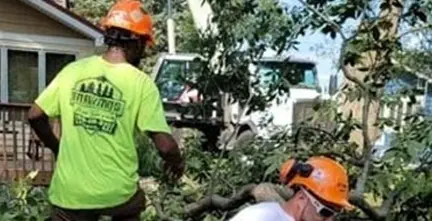
This is when an emergency tree service in Battle Creek becomes essential. These crews are trained to deal with dangerous, storm-related situations where trees are leaning, split, or tangled in nearby structures or power lines.
Professional tree crews use:
- Helmets and full protective gear
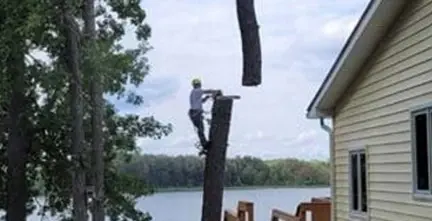
- Ropes and rigging to control falling sections
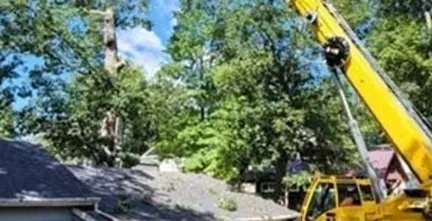
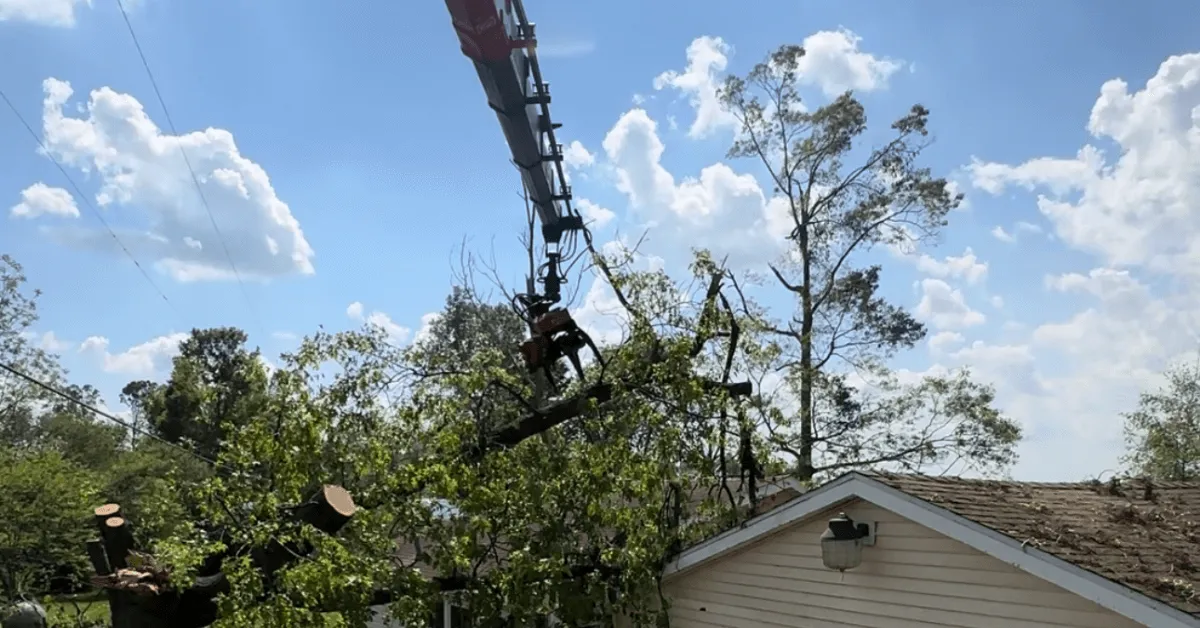
- Bucket trucks and cranes for high-risk trees
- Insurance coverage in case something goes wrong
Trying to handle storm-damaged trees on your own to save money can lead to severe injuries, major property damage, or worse. When safety is at risk, this is one situation where calling trained professionals is always the right move.
How Professionals Handle Storm-Damaged Trees
When a Battle Creek arborist arrives, the process starts with a detailed inspection. They do not just look at broken branches. They check how the tree is standing, how the roots are holding, and whether the trunk has internal cracks.
If the tree is dangerous, they decide how to remove it safely without damaging nearby homes, driveways, or landscaping. This often means taking the tree down in small sections using ropes or a crane instead of cutting it at the base.
If the tree can be saved, the arborist will remove only the damaged limbs and rebalance the canopy. In some cases, cables or braces are installed inside the tree to support weak joints.
After the work is done, the crew clears away all branches and debris. If the tree was removed completely, stump grinding is usually offered so the area can be replanted or restored.
Before leaving, professionals often check nearby trees to make sure no hidden storm damage was missed.
Battle Creek Storm Cleanup Rules
The City of Battle Creek clears streets, sidewalks, and public hazards after storms. Homeowners are responsible for everything on their own property.
The city usually makes one curbside pickup pass per neighborhood. They do not collect:
- Stumps
- Construction debris
- Household waste
Tree companies must remove debris from inside the yard. Always check city announcements before placing anything at the curb.
How to Reduce the Risk Before the Next Storm
Most storm-damaged trees don’t fail because of the weather alone. They fail because of small problems that were already there. Weak branch connections, hidden decay, unbalanced growth, and shallow roots all make a tree more likely to break when strong winds or heavy snow hit. The good news is that many of these issues can be corrected before the next storm arrives.
Here are the most effective ways homeowners in Battle Creek can lower the risk of tree failure:
- Pruning:
Removes dead, cracked, and overextended branches that catch wind and snap under pressure. - Structural trimming:
Corrects weak branch angles and uneven weight so the tree stays balanced in storms. - Annual inspections:
Finds internal rot, cracks, and root problems that are not visible from the outside. - Cabling and bracing:
Adds support to weak limbs or split trunks, reducing the chance of failure. - Root care:
Improves soil health and prevents compaction so roots can anchor the tree securely. - Storm-ready planting:
Uses wind-resistant species and proper spacing to reduce future risks. - Ongoing monitoring:
Checks trees after storms to catch delayed damage before it becomes dangerous.
Final Thoughts
Storm-damaged trees in Battle Creek are not just a cleanup problem. They are a safety risk. Acting quickly, staying away from unstable trees, and calling qualified professionals protects your home, your family, and your investment in your landscape.
If you are unsure whether a tree is safe, it is always better to have it inspected than to wait and hope.