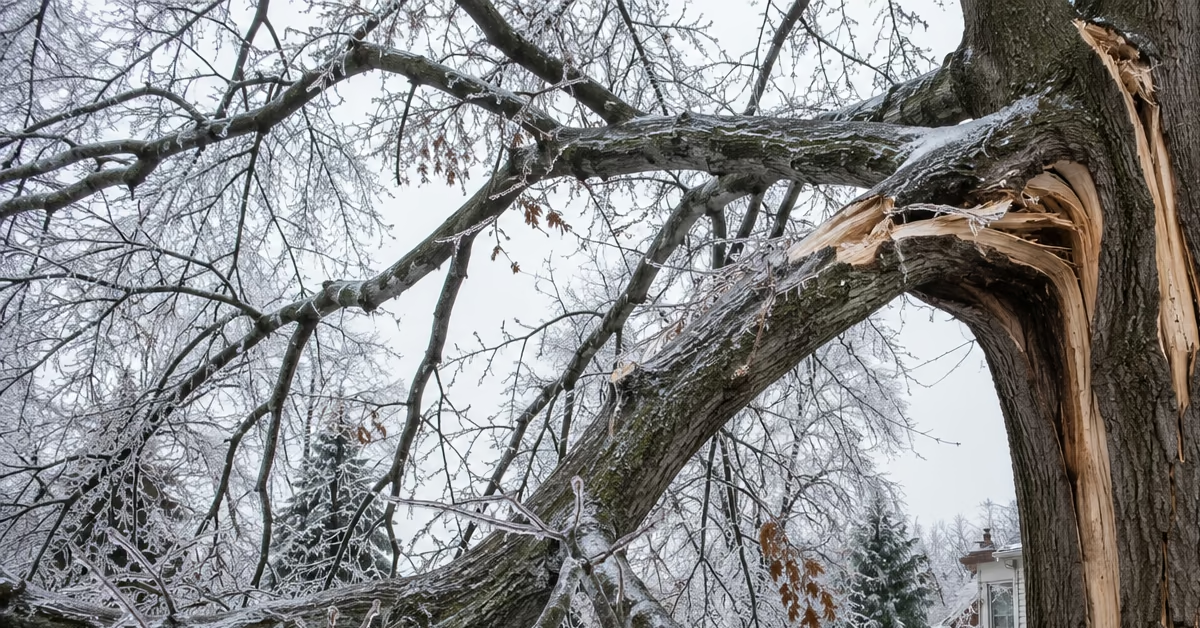
Ice storms in Southwest Michigan do not announce the damage they cause.
A tree can look completely fine the morning after freezing rain clears. Within days or weeks, the same tree splits at the trunk, drops a major limb onto a roof, or leans far enough to become an immediate hazard.
In our experience serving Battle Creek and Calhoun County properties, this is one of the most misunderstood patterns in residential tree care. The visible ice is gone. The tree is standing. Homeowners assume the worst is over.
Often, it has just begun.
Key Takeaways:
- Even a quarter-inch of ice adds extreme weight to tree canopies.
- Structural damage is often not visible from the ground immediately after a storm.
- Trees with V-shaped branch unions and included bark are most vulnerable to failure.
- Michigan’s freeze-thaw cycles worsen existing cracks over time.
- Professional assessment is the only reliable way to identify hidden structural compromise.
- Acting early almost always costs less than responding to an emergency.
What Is Ice Storm Tree Damage?
Ice storm tree damage occurs when freezing rain coats branches, bark, and branch unions with layers of glaze ice, adding hundreds of pounds of weight to a canopy structure not designed to carry it. Even a quarter-inch of ice accumulation can add more than 500 pounds of weight across a single tree’s canopy. Cracks, splits, and structural failures often develop slowly after the storm and may not be visible for days.
Why Is Ice Storm Tree Damage a Concern in Southwest Michigan?
Southwest Michigan sits in a geographic zone that experiences frequent late-winter and early-spring ice events. Battle Creek and Calhoun County properties face freezing rain, sleet, and mixed precipitation multiple times per year. Trees in this region are repeatedly stressed by ice loading, freeze-thaw cycles, and heavy wind, making structural compromise cumulative rather than event-based.
When Should You Assess Trees After an Ice Storm?
Assess your trees as soon as conditions are safely accessible, ideally within 48 to 72 hours after an ice storm. Many post-storm structural failures happen in the days following the event as temperatures fluctuate and ice weight shifts. Waiting longer without assessment increases the risk of an undetected hazard causing property or personal injury.
How Ice Forms and Why Trees Fail:
According to Wikipedia’s overview of ice storm mechanics, freezing rain forms when precipitation falls through a layer of above-freezing air and then passes through a thin sub-freezing layer near the surface. The drops remain liquid but freeze on contact with any surface below 32 degrees Fahrenheit.
For trees, this means every branch, twig, and bark surface becomes coated in heavy glaze ice.
The load builds gradually. A half-inch of ice accumulation can add over 500 pounds per every ten feet of branch span. Mature trees with wide, spreading canopies can carry thousands of pounds of ice weight during a significant storm.
Most healthy trees with good structure tolerate moderate ice loading. The problem is that not every tree in Southwest Michigan has good structure.
Note: Ice does not just break branches. It reveals and accelerates pre-existing structural weaknesses that were already present before the storm hit.
The Warning Signs Battle Creek Homeowners Must Watch For:
Cracked or Split Bark:
Long vertical cracks running up the trunk are a serious warning sign after an ice storm.
These frost cracks often form along existing lines of weak tissue. Cold temperatures contract the wood, ice loading stresses the outer layers, and the bark separates from the wood beneath. A tree with fresh frost cracks needs professional evaluation before it becomes an emergency.
V-Shaped Branch Unions:
This is one of the most common structural vulnerabilities we find on Southwest Michigan properties.
A V-shaped union, where two stems grow at a narrow angle, traps bark between them. This “included bark” prevents proper wood fiber bonding and creates a natural split point under load. Ice events push these unions past their tolerance. In our experience, a tree with multiple included-bark unions in the upper canopy should be assessed after every significant ice event.
Hanging Branches (Widow Makers):
A broken branch that remains suspended in the canopy is one of the most dangerous outcomes of an ice storm.
These are called widow makers for a reason. They are often difficult to spot from ground level and can weigh hundreds of pounds. We frequently see Battle Creek homeowners standing directly underneath broken but lodged branches without realizing the hazard above them.
If you notice any part of the crown that looks different than it did before the storm, keep people and vehicles away until a professional has cleared it.
Leaning Trees After Ice Load:
A tree that is leaning at a new angle after an ice storm is not settling back into place.
Ice weight combined with saturated, soft soil around the root zone can shift root anchoring. A tree that has moved even slightly from its prior vertical position needs immediate evaluation. This is especially common in Southwest Michigan’s clay-heavy soils, where root systems are already shallower than ideal.
Heaved Root Systems:
Look at the ground around the base of the tree.
If the soil has lifted, cracked, or separated from the base of the trunk, the root system has been compromised. This type of root heave significantly increases fall risk even after the ice is gone and the tree appears stable.
Note: Surface appearance after an ice storm tells you very little. Structural failure happens from the inside out and from the ground up.
The Tree Species Most Vulnerable to Ice Damage in Southwest Michigan:
Certain species fail under ice loading far more often than others. A common issue on Southwest Michigan properties is the prevalence of silver maple, box elder, and Bradford pear, all of which have weak wood structure and high ice failure rates.
Silver maple: Fast-growing and extremely common in Battle Creek neighborhoods. Silver maple has naturally brittle wood and tends to develop multiple co-dominant stems that split under ice loading.
Box elder: Another fast-growing volunteer species that spreads widely across Calhoun County properties. It has weak branch attachments and frequently suffers major structural failures after ice events.
Bradford pear: Still found on many older landscaped properties. Bradford pear develops a tight, congested crown with numerous included-bark unions. It fails regularly under ice and wind loads.
Mature oaks and elms generally fare better due to stronger wood and more U-shaped branch unions, though they are not immune to ice damage, especially if they carry pre-existing decay.
The Michigan DNR Forest Resources Division provides guidance on Michigan’s native and non-native tree species and their structural characteristics under weather stress.
Common Mistakes Homeowners Make After Ice Storms:
Shaking branches to remove ice: Many homeowners attempt to knock or shake ice off branches immediately after a storm. This is one of the most damaging things you can do. The ice provides temporary structural support as branches are loaded. Rapid removal of that load, especially by shaking, can cause immediate splitting at weakened union points.
Assuming a standing tree is a safe tree: We hear this frequently. The tree is still standing, so it must be fine. Ice storm damage is largely internal and develops over days and weeks. A standing tree is not necessarily a structurally sound tree.
Ignoring small cracks: Many property owners in Battle Creek and across Calhoun County see small bark splits and assume they are cosmetic. Frost cracks and bark separation create pathways for moisture, fungal infection, and decay that deepen and widen with each subsequent freeze-thaw cycle.
Waiting until spring to schedule assessment: By the time green-up arrives, structurally compromised trees have been sitting through additional freeze-thaw events, potentially expanding the original damage significantly.
How Professional Crews Evaluate Ice Storm Damage:
A professional assessment after an ice storm goes well beyond looking for broken branches.
A qualified tree care professional, as described in standards maintained by certified arborist training and assessment programs, evaluates the full structural system of a tree, including branch union angles, crown symmetry, trunk taper, decay indicators, root zone conditions, and evidence of prior structural failure or repair.
On Southwest Michigan properties, our process after a significant ice event includes:
- Checking all major branch unions for included bark and post-storm separation
- Looking for new cracks or splits in the trunk and major scaffold limbs
- Identifying any hanging or partially attached branches in the upper canopy
- Assessing root zone stability and soil conditions around the base
- Evaluating the crown for asymmetry that signals lost limb weight
Many property owners are surprised to discover that the trees requiring urgent action after an ice storm are not always the ones that visibly broke. Quiet internal damage in a structurally compromised tree often poses a greater long-term hazard.
When ice storm damage is severe enough to create an immediate hazard, our 24/7 emergency tree service responds regardless of the hour.
For trees that need removal following assessment, our tree and stump removal team handles the full scope of work, from felling through stump grinding.
For ongoing monitoring of trees that are damaged but not yet at the removal threshold, professional tree health care can extend the life of valuable trees and track structural changes over time.
How Michigan’s Freeze-Thaw Cycles Worsen Ice Storm Damage:
Southwest Michigan winters are not static.
Temperatures cycle above and below freezing repeatedly from November through March. Water enters cracks created by ice loading, expands as it freezes, and widens those cracks further with each cycle. A small frost crack in January can be a significant trunk split by late February.
We frequently see trees on Battle Creek and Marshall-area properties that appeared manageable in December but had developed serious structural compromise by the time homeowners called us in late February or early March.
Scheduling a professional tree health care evaluation in November, before the first significant ice event, is one of the most cost-effective things a Southwest Michigan property owner can do.
Note: Ice storm damage does not freeze in place. Michigan’s freeze-thaw cycle actively worsens it throughout the winter.
Frequently Asked Questions:
What trees are most likely to fail during a Michigan ice storm?
Silver maple, box elder, and Bradford pear are the most common structural failure trees on Southwest Michigan properties after ice storms. These species have weak wood, tight branch unions, and high rates of included bark. Mature trees of any species with pre-existing decay, hollow trunks, or co-dominant stems are also at elevated risk.
How much ice does it take to damage a tree?
According to ice storm research, a quarter-inch of ice accumulation can add more than 500 pounds of weight per line span. For a large tree with an extended canopy, total ice load during a significant storm can exceed several thousand pounds, far beyond what structurally compromised unions can support.
Should I try to remove ice from my trees during a storm?
No. Shaking or knocking ice off branches can cause immediate splitting at weakened unions. Allow the ice to melt naturally and then have a professional assess the canopy once conditions are safe.
Can a partially damaged tree recover after an ice storm?
Some trees can recover from minor ice damage if the structural integrity of the trunk and primary scaffold limbs is intact. Trees with major trunk splits, deep frost cracks, or root heave rarely recover to a structurally safe condition. A professional assessment is the only way to determine which category your tree falls into.
How long after an ice storm should I wait before getting a tree assessment?
Do not wait. Schedule a tree inspection as soon as conditions are safely accessible, ideally within 48 to 72 hours. Post-storm structural failures happen during the days following the event, not just during it.
Will homeowners insurance cover tree damage from an ice storm?
Coverage depends on your specific policy. Most standard homeowners policies cover damage to structures caused by a fallen tree. Trees that fall in the yard without hitting a structure are typically not covered for removal costs. Document all damage with photos immediately and contact your insurer before beginning any cleanup.
How do I know if a hanging branch is actually dangerous?
Any broken branch that remains suspended in the canopy is a potential widow maker. If you notice a section of the crown that looks different, if you hear cracking sounds from a tree, or if you can see a break point anywhere in the upper canopy, treat it as an active hazard. Keep people, vehicles, and structures clear until a professional has assessed and removed it.
If a Tree Near Your Home Was Hit by an Ice Storm, Do Not Wait to Have It Assessed:
Structural compromise after a Michigan ice storm does not resolve on its own. In most cases it worsens, particularly during the freeze-thaw cycles that follow every significant ice event in Southwest Michigan.
The cost of a professional assessment is small. The cost of an undetected structural failure falling on a vehicle, roof, or person is not.
At Brawner’s Tree Service, we assess storm-damaged trees throughout Battle Creek, Marshall, Albion, Springfield, and the broader Calhoun County area. Our crews have evaluated hundreds of ice-damaged trees on Southwest Michigan properties and understand exactly what post-storm structural failure looks like before it happens.
If your property was hit by an ice storm and you have any concerns about a tree, contact us for a professional assessment. We will tell you honestly whether a tree needs immediate attention, scheduled removal, or ongoing monitoring.
Contact Brawner’s Tree Service for a post-storm tree assessment in Battle Creek and Southwest Michigan.
Visit brawnerstreeservice.com or call us to speak with a tree care professional.