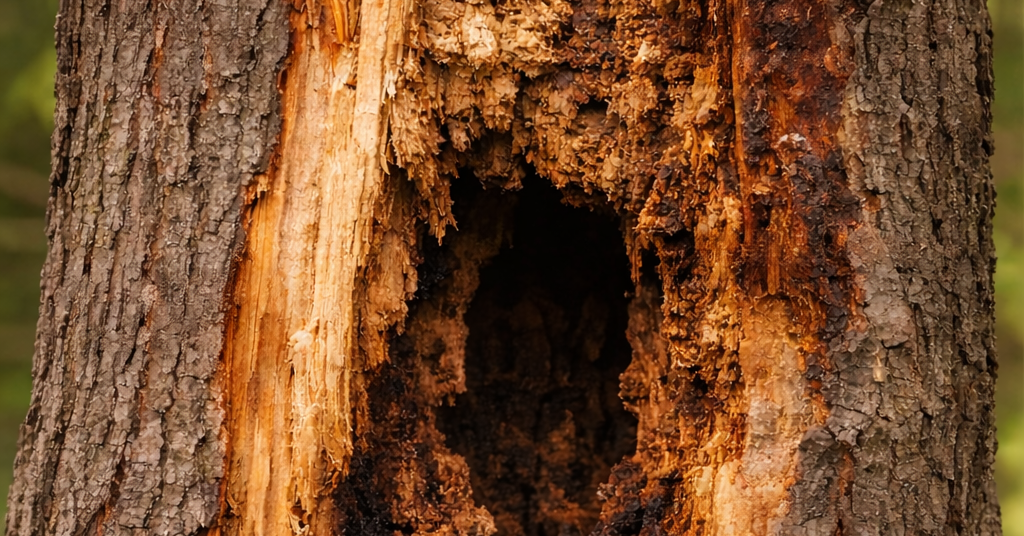
Internal tree decay, often a silent threat, can compromise your tree’s health and stability without immediate visible signs. This hidden damage poses significant risks, from unexpected branch failures to the complete collapse of a seemingly healthy tree. Understanding how to spot these subtle indicators is essential for maintaining a safe and beautiful landscape.
Key Takeaways
- Internal tree decay often begins unseen, making early detection challenging but crucial for tree health and safety.
- Visible signs like fungal growths (conks), peeling bark, sudden leaning, and excessive dead branches are strong indicators of hidden rot.
- Advanced diagnostic tools, such as sonic tomography, can detect decay deep within a tree’s structure, offering precise assessments.
- Ignoring signs of decay can lead to significant safety hazards, property damage, and the eventual loss of the tree.
- Professional arborists from Brawner’s offer expert diagnosis and tailored treatment plans, far exceeding the capabilities of DIY assessments.
- Proactive care, including proper pruning and regular inspections, is key to preventing decay and ensuring your trees thrive.
What Is Internal Tree Decay and Why Is It a Threat?
Internal tree decay, also known as tree rot, is the breakdown of a tree’s woody tissue from the inside out, primarily caused by fungi and other microorganisms. This process weakens the tree’s structural integrity, making it susceptible to failure. Decay often starts in the heartwood, the non-living central part of the trunk and branches, and can spread outwards. It’s a natural process in forest ecosystems, but it can be a serious hazard in urban and residential settings.
Visible Signs of Internal Tree Decay: Your Tree’s Warning Signals
While decay often hides internally, trees do present several critical external clues that demand your attention. These visible signs are your tree’s way of signalling distress and potential structural compromise.
Fungal Growth: The Red Flag
Fungal growths are one of the most definitive indicators of active internal decay, as these structures are the fruiting bodies of wood-rotting fungi. The presence of these organisms means the decay process is well underway.
- Mushrooms and Conks: Look for shelf-like growths (conks) or mushrooms emerging from the trunk, branches, or at the tree’s base. Different fungi indicate different types of decay.
- Mycelial Fans: Sometimes, you might see white, fan-like fungal mats under the bark or at the root collar, particularly with root rot pathogens.
- Oozing Sap/Bleeding: Sap leaking from specific spots can be a sign of a wood-rotting pathogen or insect activity, often associated with decay.
Bark Abnormalities and Cavities
The bark is a tree’s protective layer, and any significant changes can signal underlying problems, including decay or insect infestations that lead to decay. Cavities, once formed, are direct evidence of advanced rot.
- Peeling or Cracked Bark: Dry, flaking, or excessively peeling bark often suggests that the woody tissue underneath is dead or dying.
- Soft or Rotting Spots: Directly visible soft or mushy areas on the trunk or large limbs are unmistakable signs of decay.
- Cavities and Cracks: Open holes or deep cracks in the trunk or major branches indicate that significant heartwood has rotted away, compromising the tree’s strength.
Branch Dieback and Leaf Issues
The bark is a tree’s protective layer, and any significant changes can signal underlying problems, including decay or insect infestations that lead to decay. Cavities, once formed, are direct evidence of advanced rot. According to the USDA Forest Service, many decay-causing fungi enter through wounds in the bark, which then develop into cavities as the internal structure is consumed.
- Dead or Brittle Branches: Excessive dead branches, especially in the upper canopy, can signal that the tree is struggling, often due to decay affecting water and nutrient flow.
- Leaf Discoloration or Wilting: Leaves that are unusually discolored, spotted, or wilting during the growing season, or premature leaf drop, might indicate disease and decay.
- Sparse Canopy: A thinning canopy or reduced leaf size can be a sign of stress from decay or root issues.
Trunk and Root Base Indicators
The base of the tree and its root system are foundational to its stability. Problems in these areas often suggest root rot or decay spreading up into the trunk, posing a critical safety risk.
- Hollow Sounding Trunk: Tapping the trunk with a rubber mallet and hearing a hollow sound can suggest significant internal decay or a cavity.
- Sudden Leaning or Shifting: An unexpected change in the tree’s posture, especially after a storm, can be a dire sign of severe internal rot compromising stability.
- Visible Root Damage or Mounded Soil: Damage to roots from construction, or unusual mounding of soil at the tree’s base, can be indicative of root rot, often a precursor to trunk decay.
- Sawdust and Insect Activity: Fine sawdust near the base or unusual insect activity (e.g., carpenter ants, beetles) can signal decay, as these insects are often attracted to decaying wood.
Invisible Threats: When Decay Hides
Sometimes, the most dangerous decay is the kind you can’t see with the naked eye. While external signs are crucial, relying solely on them can lead to misdiagnosis or overlooking advanced internal problems. This is where professional assessment becomes invaluable.
The Limitations of Visual Inspection
Visual inspections are a great starting point, but they have inherent limitations. Decay can be far more advanced internally than any external symptom suggests.
- Heartwood Decay: Many decay fungi attack the non-living heartwood first, leaving the outer, living sapwood intact and seemingly healthy.
- Hidden Wounds: Decay can originate from old pruning cuts or storm damage that has since healed over, trapping the infection inside.
- Root Rot: Root decay often progresses extensively underground before any signs appear in the canopy or trunk.
Advanced Diagnostic Tools
When visual clues are insufficient or a higher level of certainty is needed, professional arborists use specialized tools to ‘see’ inside the tree without causing damage. These advanced diagnostics provide a precise map of the tree’s internal condition. For a detailed breakdown of these technologies, the International Society of Arboriculture (ISA) provides resources on how certified arborists utilize diagnostic equipment to ensure structural safety.
- Arborsonic 3D Acoustic Tomographs: These devices send sound waves through the tree trunk. The speed at which sound travels indicates wood density. Areas of decay or hollowness will show slower sound travel, creating a color-coded internal map on a screen. This non-invasive method is highly accurate.
- Resistographs: These tools use a micro-drill to measure the resistance of the wood. Lower resistance indicates decay or hollow areas. While minimally invasive, it provides a precise measurement of wood density along the drilling path.
- Increment Borers: A small core sample is extracted from the tree, allowing for direct visual inspection of the wood’s condition. This is more invasive but provides a physical sample for analysis.
The Dangers of Undetected Decay
Undetected internal tree decay is more than just an aesthetic problem; it’s a significant safety and financial risk. Ignoring the signs can lead to severe consequences for your property, your family, and the tree itself.
- Increased Risk of Tree Failure: Weakened wood can no longer support the tree’s weight, making it prone to breaking or falling, especially during storms or high winds.
- Property Damage: Falling branches or entire trees can cause extensive damage to homes, vehicles, fences, and other structures, leading to costly repairs.
- Personal Injury: The most severe risk is injury or fatality to people or pets caught under a failing tree.
- Loss of Valuable Landscape Assets: Healthy, mature trees add significant value and beauty to your property. Losing a tree to preventable decay is a substantial loss.
- Spread of Disease: Some decay fungi can spread to nearby susceptible trees, creating a larger problem in your landscape.
DIY Assessment vs. Professional Tree Inspection: A Comparison
When faced with potential tree decay, homeowners often wonder if they can handle the assessment themselves or if professional help is necessary. While a basic visual check is good, a Professional arborist offers a level of expertise and equipment that DIY efforts cannot match. Understanding the differences helps you make an informed decision for your tree’s health and your safety.
| Benefit | DIY Risk | Professional Advantage |
| Detection Accuracy | Misses internal decay and hidden structural issues | Advanced tools detect internal rot, cavities, and weak points |
| Safety Evaluation | Relies on guesswork, risk often underestimated | Structured risk assessment based on tree stability and failure likelihood |
| Tools & Methods | Basic visual check only | Uses resistographs, sonic tomography, and expert diagnostics |
| Decision Making | Uncertain, may delay action or overreact | Clear recommendations: prune, treat, cable, or remove |
| Long-Term Tree Health | Issues are often ignored until severe | Preventive care plans improve lifespan and stability |
| Expertise | Limited homeowner knowledge | Certified arborists trained in tree biology and risk assessment |
When to Call a Professional Arborist in the Local Area
Knowing when to bring in a professional is key to effective tree care and safety. Don’t wait until a tree becomes an undeniable hazard; early intervention can often save a tree and prevent costly damage.
The Brawner’s Advantage: Local Expertise
Brawner’s stands as a premier service provider in the local area, offering unparalleled expertise in tree health and safety. Our team of Professional arborists understands the unique challenges trees face in our climate and environment. When you partner with us, you’re not just getting a service; you’re gaining peace of mind.
- Suspicious Symptoms: Any of the visible signs of decay mentioned earlier warrant a call. It’s always better to be safe than sorry.
- Sudden Tree Changes: If a tree suddenly leans, drops large branches, or shows rapid decline, immediate professional assessment is needed.
- Post-Storm Assessment: After severe weather, even seemingly healthy trees can have hidden damage that predisposes them to decay.
- Construction Near Trees: Root damage from construction can create entry points for decay fungi.
- High-Value Trees: For trees that are significant to your landscape or property value, regular professional check-ups are a wise investment.
- Peace of Mind: If you’re simply concerned about a tree’s health or stability, a professional opinion can provide clarity.
Common Mistakes Homeowners Make When Dealing with Tree Decay
Even with good intentions, homeowners can inadvertently worsen tree decay or mismanage its signs. Avoiding these common mistakes can significantly improve your tree’s chances of recovery and prevent further issues.
- Ignoring Early Signs: Dismissing fungal growths or minor bark changes as harmless can allow decay to progress unchecked.
- DIY Pruning of Large Branches: Improper pruning cuts create large wounds that are prime entry points for decay fungi, especially if flush cuts or stub cuts are made.
- Over-Watering or Under-Watering: Both extremes stress trees, making them more vulnerable to disease and decay.
- Compacting Soil Around Roots: Heavy foot traffic or machinery can compact soil, damaging roots and reducing oxygen, leading to root rot.
- Painting Wounds: Historically, wound paints were used, but research shows they trap moisture and inhibit natural compartmentalization, often worsening decay.
- Delaying Professional Help: Waiting until a tree is visibly hollow or severely compromised often means the only option left is costly removal, rather than preservation.
- Misidentifying Symptoms: Confusing normal seasonal changes or minor issues with severe decay, or vice versa, can lead to unnecessary worry or dangerous complacency.
- Removing Decay Yourself: Attempting to ‘clean out’ decay from a cavity without proper knowledge can further damage the tree and expose healthy wood to new infections.
Preventative Measures to Protect Your Trees
Prevention is always better than cure, especially when it comes to tree health. Implementing proactive measures can significantly reduce the likelihood of internal tree decay and extend the life of your valuable landscape assets. For more scientific context on the decay process, Wikipedia’s entry on Wood-decay fungus offers a comprehensive look at the different types of rot and their biological mechanisms.
- Proper Pruning: Ensure all pruning is done correctly by a Professional arborist, making clean cuts at the right location to promote rapid wound closure and minimize decay entry points.
- Avoid Wounding Trees: Protect tree trunks from lawnmower or string trimmer damage. Be mindful during construction or landscaping projects to prevent root and bark injuries.
- Maintain Tree Health: Healthy trees are more resistant to disease. Provide adequate water, especially during dry spells, and consider soil amendments or fertilization based on soil tests.
- Regular Inspections: Schedule annual inspections with a qualified arborist from Brawner’s to catch early signs of decay or other issues.
- Species Selection: Choose tree species that are well-suited to your local climate and soil conditions, as stressed trees are more vulnerable to decay.
- Monitor for Pests and Diseases: Address pest infestations or other diseases promptly, as they can weaken a tree and create entry points for decay fungi.
Cost and Timeline for Tree Decay Assessment and Treatment
Understanding the financial and time commitments involved in addressing tree decay helps you plan effectively. Costs can vary widely depending on the severity of the decay, the size of the tree, and the specific treatments required.
- Initial Assessment: A visual inspection by a Professional arborist typically costs between $100 and $300. This often includes a basic health report and recommendations.
- Advanced Diagnostics: If advanced tools like sonic tomography are needed, expect costs ranging from $200 to $600 per tree, depending on the tree’s size and the complexity of the assessment.
- Pruning for Decay Management: Targeted pruning to remove decayed or hazardous branches can range from $250 to $1,000+, based on tree size, accessibility, and the amount of work required.
- Cabling and Bracing: For structurally compromised trees, installing support systems can cost between $500 and $2,000, depending on the tree’s size and the system’s complexity.
- Fungicide Treatments: While less common for established internal decay, some root rot or specific fungal diseases may benefit from targeted treatments, costing $150 to $500 per application.
- Tree Removal: If decay is too advanced and the tree poses an unacceptable risk, removal costs can range from $400 for small trees to over $2,000 for large, complex removals, especially in confined spaces. This is the most expensive intervention.
- Timeline for Assessment: A visual assessment usually takes 30-60 minutes. Advanced diagnostics might take 1-3 hours per tree, with results often available immediately or within a few days.
- Timeline for Treatment: Pruning or cabling can often be completed within a day. Extensive removals might take several days. The effectiveness of treatments like fungicides may require multiple applications over months or years.
Frequently Asked Questions
What causes internal tree decay?
Internal tree decay is often caused by fungal infections that enter through wounds, cracks, or improper pruning cuts. These fungi break down the wood structure from the inside, weakening the tree’s integrity over time. Environmental stressors and pests can also contribute to a tree’s susceptibility to decay.
Can a tree have internal decay and still look healthy?
Yes, a tree can look healthy on the outside while experiencing significant internal decay. This is because decay often starts in the heartwood, deep within the trunk or branches, before visible external symptoms like fungal growths, cracks, or dead branches appear. Regular professional inspections are key.
How do arborists detect hidden internal decay?
Arborists use specialized tools like resistographs, which measure drilling resistance, or sonic/acoustic tomographs, which map sound wave travel, to detect hidden decay. These tools create internal profiles of the tree, revealing compromised areas without causing significant damage to the tree.
What should I do if I suspect my tree has internal decay?
If you suspect internal tree decay, the best first step is to contact a Professional arborist. They can accurately diagnose the issue, assess the tree’s risk, and recommend appropriate actions, which may include pruning, treatment, or, in severe cases, removal to ensure safety.
How much does a professional tree decay assessment cost?
The cost of a tree decay assessment varies based on the tree’s size, location, and the diagnostic tools required. Basic visual inspections might be part of a general consultation, while advanced tomography could range from $200 to $600 per tree. Treatment costs depend on the severity and method.
How quickly does internal tree decay progress?
Decay can progress slowly over years or rapidly, depending on the tree species, pathogen, and environmental conditions. Some aggressive fungi can cause significant structural damage within a few growing seasons, while others might take decades. Early detection is vital for effective management.
Early Detection Is the Key to Preventing Tree Failure
Identifying internal tree decay early protects your property and preserves your trees’ health. While initial signs might be subtle, understanding the indicators and knowing when to seek expert help is crucial. For thorough, reliable tree health assessments and personalized care in the local area, trust Brawner’s. Don’t wait until it’s too late; proactive care saves trees and prevents future issues. Contact us today for a professional evaluation.