Tree cracks look small, but they’re one of the most common early warning signs of structural failure. Homeowners usually notice them in winter or early spring, especially after temperature swings, storms, or heavy snow. Some cracks are harmless, but deep splits can weaken the trunk, invite decay, and cause sudden failure. This guide breaks down why tree cracks form, what different types mean, and when you need a professional arborist to step in.
Key Takeaways
- Tree cracks are vertical fractures in the bark and wood, often caused by environmental stress, structural weakness, or sudden damage. They are a clear sign that the tree is under significant strain.
- Common causes include rapid temperature changes (frost cracks and sunscald), weak branch unions (codominant stems with included bark), and external events like lightning strikes or mechanical impact.
- While minor surface cracks may heal on their own, deep splits that compromise more than a third of the trunk’s circumference or show signs of decay often require professional assessment to prevent tree failure.
- Homeowners should monitor cracks, keep the area clean, and avoid trying to fill them. For significant splits, cabling, bracing, or removal by a professional arborist are the safest options.
What Are Tree Cracks?
A tree crack, also known as a split or fissure, is a vertical separation in the bark that can extend into the inner wood of the trunk or a major limb. Tree cracks matter because they weaken the trunk and can lead to sudden failure, especially in older or stressed trees.
According to Purdue Extension, these cracks are significant tree defects that indicate stress has exceeded the tree’s structural capacity. They range from minor surface fissures to deep splits that compromise stability. In Michigan’s climate, dramatic temperature swings make frost cracks particularly common during late winter. Understanding the cause is the first step toward the right solution, whether that’s monitoring, professional support from Tree Health Care services, or safe removal.
A Field Story from Calhoun County
Our crew was called to a Marshall property to inspect a large red oak with a deep crack near its base after a severe winter. The homeowner worried the tree might fall on their house. We identified a severe frost crack that had reopened along a pre-existing weak point, running several feet up the trunk.
Because the crack was significant and the tree stood in a high-risk location, we installed cables high in the canopy and a through-bolt near the crack to provide support. We also performed crown cleaning to reduce weight and wind resistance. This stabilized the tree, letting the homeowner keep their oak while managing risk. It showed how professional assessment can find solutions beyond immediate Tree Removal.
Common Causes of Tree Cracks and Splits
Tree cracks result from a combination of environmental stress, structural defects, and external damage.
Environmental Causes
Michigan’s dramatic temperature swings from day to night create conditions for several types of cracks.
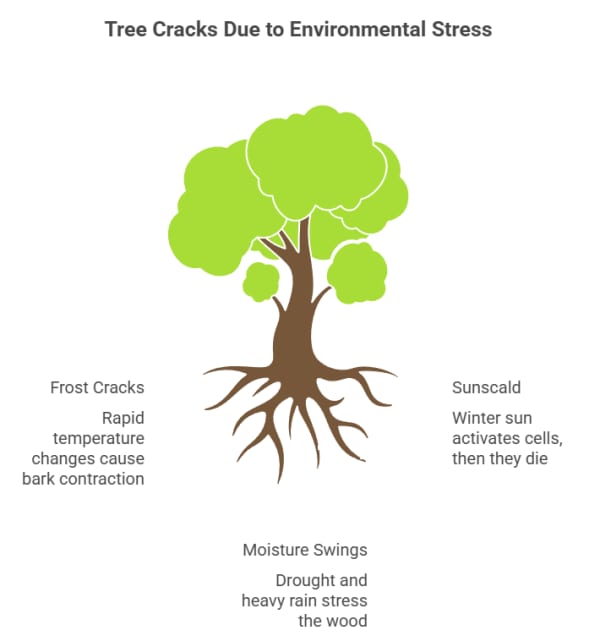
- Frost Cracks: These classic vertical cracks appear in late winter or early spring. As explained on Wikipedia, the sun warms bark on cold days, causing expansion. When the temperature drops rapidly at night, the outer bark contracts faster than the inner wood. This pressure splits the trunk, sometimes with an audible pop. Trees with thin bark or pre-existing wounds are most vulnerable.
- Sunscald: Similar to frost cracks, sunscald affects the south or southwest side of thin-barked trees. Winter sun heats bark, causing cells to break dormancy. When temperatures drop at night, these active cells die, causing dead tissue that leads to cracking and peeling bark.
- Drought and Excessive Moisture: Extreme soil moisture swings stress trees. Prolonged drought causes wood to shrink and become brittle. Heavy rainfall after dry spells creates growth surges that pressure bark from inside, causing splits. The University of Tennessee Extension documents this as a common cause in regions with variable rainfall.
Structural Defects
- Codominant Stems: This is one of the most common defects leading to failure. When a tree develops two or more main trunks of equal size from the same point, they form a weak V-shaped union. Bark becomes trapped between stems as they grow, creating “included bark” that prevents a strong woody connection. This acts like a wedge pushing stems apart. Over time, weight and weather forces cause this weak union to split.
External Damage
- Lightning Strikes: Lightning turns water in tree tissues instantly to steam, creating an explosive force that blows off bark, shatters wood, and splits trunks. Damage appears as long vertical scars, but internal and root damage often exceeds what’s visible.
- Mechanical Injury: Damage from lawnmowers, trimmers, vehicles, or construction equipment creates wounds that don’t heal properly. These become weak points that later develop into cracks under wind or cold stress.
How to Check a Crack Safely
Before calling an arborist, you can do a basic inspection:
- Check depth: Look to see if you can see wood or just the bark surface.
- Press around edges: Soft, crumbly, or hollow spots indicate decay.
- Look up the trunk: If the crack runs into a branch union, the risk is higher.
- Step back: Check for lean, canopy weight, and proximity to homes or driveways.
For anything beyond surface cracks, contact a professional arborist for proper assessment.
What to Do When You Find a Crack in Your Tree
Not all cracks mean removal. Here’s how to assess the situation:
| Crack Type | Risk | What It Looks Like | Action |
|---|---|---|---|
| Minor Surface Crack | Low | Only outer bark. Less than 1 inch deep. No wood exposed. | Monitor. Keep clean. No sealant. |
| Deep Vertical Crack | Medium to High | Extends into wood. Several inches deep. Often on the south or west side. | Call an arborist. Check depth and decay. Possible cabling. |
| Split at Branch Union | High | V-shaped union. Included bark. Moves or creaks in the wind. | Immediate arborist. High failure risk. Cabling or removal. |
| Crack with Decay | High | Fungus present. Soft or hollow wood. Sawdust at base. | Urgent evaluation. Structure compromised. Removal likely. |
| Lightning Crack | High | Splintered wood. Bark blown off. Burn marks. | Assess bark loss. More than 50% loss is usually fatal. May need emergency removal. |
Professional Solutions for Cracked Trees
When cracks are too severe for natural sealing, professional arborists use specific techniques. These are not DIY procedures. Improper cabling increases failure risk.
- Cabling and Bracing: Steel cables installed in the upper canopy limit movement. Threaded rods through cracked trunk sections hold them together. Properly installed systems can extend tree life by decades.
- Pruning: Strategic crown reduction removes weight from compromised limbs and improves overall structure, reducing stress on cracked areas while preserving the tree.
- Removal: When cracks are too severe, decay is extensive, or failure risk is unacceptable, removal is the responsible choice. Our team handles high-risk Tree Removal safely with specialized equipment, including our grapple saw crane.
Frequently Asked Questions
Is it normal for tree bark to split?
Minor splitting or shedding of outer bark is normal as trunks expand. However, deep vertical cracks extending into the wood indicate problems. Purdue Extension recommends a professional evaluation for any crack deeper than the bark layer.
Can a cracked tree heal itself?
Trees don’t heal like animals; they seal. Healthy trees form callus tissue around wound edges, eventually sealing to prevent decay. This only works for minor wounds. Deep structural splits cannot fuse back together. Trees compartmentalize damage, walling it off from healthy tissue.
Should I fill a crack in my tree?
No. Filling cracks with cement, foam, or other materials is outdated and harmful. It traps moisture, accelerates decay, and prevents natural protective sealing. Modern arboriculture shows that cracks should remain open to air. Consult an arborist for proper assessment.
My tree was struck by lightning. Will it die?
Not necessarily, but survival chances are reduced. Lightning causes severe internal damage that may not be immediately apparent. Electrical current can kill roots, damage the cambium layer, and create stress, leading to years of decline. Have a professional arborist inspect lightning-struck trees. Emergency Tree Service may be needed if the tree is unstable.
How can I prevent tree cracks?
You cannot prevent all cracks, but you can promote tree strength:
- Water properly during late summer and fall dry periods
- Mulch correctly to maintain even soil moisture
- Prune young trees to encourage a single, strong central leader
- Protect trunks from mower and trimmer damage
- Install trunk wraps on young trees in fall to prevent sunscald
- Schedule regular inspections to catch structural problems early
What is the most dangerous type of tree crack?
Cracks at codominant stem unions with included bark are most dangerous. This structural defect creates a time bomb where unions weaken as trees grow larger and heavier. Failures often happen suddenly during storms or under ice load with little warning. If you see V-shaped unions on major trees near your home, have them evaluated immediately.
Expert Tree Care for Damaged Trees in Calhoun County
Brawner’s Tree Service is a family-owned company with over 45 years of combined experience throughout Battle Creek, Kalamazoo, Portage, and greater Calhoun County. Since 2010, we’ve provided honest, affordable service with safety as our top priority.
Our licensed and insured team provides:
- Professional cracked tree assessment
- Cable and brace system installation
- Strategic risk-reduction pruning
- Safe hazardous tree removal with grapple saw crane
- 24/7 emergency storm response
- Comprehensive tree health care plans
We offer free estimates, competitive pricing, and “no leaf left behind” cleanup. Call (269) 371-5449 for immediate assistance. Available 24/7 for emergencies.
Schedule your free consultation on our Contact page.